AI Avatars and Digital Presenters: The Face of Modern Content
How generative video platforms are redefining corporate communication, training, and global marketing at scale.
AI avatars have evolved from experimental novelties into essential enterprise tools for scalable, multilingual content production. This article explores the current landscape of digital presenters, the technical shift toward neural rendering, and how organizations are leveraging these assets to transform their marketing and training workflows.
The New Standard of Digital Presence
The era of the static, text-heavy digital interface is rapidly receding. In 2026, the face of modern content is increasingly synthetic, driven by AI avatars that offer a human-like connection without the logistical overhead of traditional video production. For global enterprises, the ability to deploy a consistent, professional presenter across dozens of languages is no longer a futuristic ambition; it is a standard operational requirement. Platforms like HeyGen and Synthesia have moved beyond simple talking heads, offering sophisticated tools that integrate seamlessly into existing marketing and L&D stacks.
This shift is fundamentally changing how we perceive digital communication. By decoupling the message from the physical presenter, companies can now iterate on content in real-time. Whether it is a personalized sales outreach video or a mandatory compliance training module, the barrier to entry for high-quality video production has been lowered significantly. The result is a more dynamic, accessible, and personalized digital experience that meets the demands of a globalized, always-on audience.
As we navigate this transition, it is critical to distinguish between the hype and the utility. The current market is defined by platforms that prioritize either high-volume corporate training or high-fidelity marketing engagement. Understanding the nuances of these tools—and the underlying technology that powers them—is essential for any organization looking to integrate AI presenters into their long-term content strategy.

Synthesia vs. HeyGen: The Market Leaders
The competition between Synthesia and HeyGen represents the two primary philosophies in the AI avatar space. Synthesia has long been the gold standard for corporate training and internal communications. With a library of over 240 avatars, it excels in providing a streamlined, professional environment where consistency and ease of use are paramount. Its focus on enterprise-grade security and SCORM-compliant exports makes it a natural choice for L&D departments that need to deploy training at scale across global teams.
Conversely, HeyGen has carved out a dominant position in the marketing and creative sectors. With a library exceeding 1,100 stock avatars and a heavy emphasis on realism, HeyGen is often the preferred tool for social media content, influencer-style ads, and personalized outreach. Its ability to animate static images into 'TalkingPhotos' and its robust voice-cloning capabilities allow for a level of creative flexibility that is highly valued by marketing teams looking to maintain a distinct brand voice while rapidly iterating on campaign assets.
Choosing between these platforms is rarely about which is 'better' in a vacuum; it is about the specific workflow requirements of the user. Synthesia offers a more structured, template-driven approach that minimizes the learning curve for non-technical staff. HeyGen, while slightly more complex, provides a broader set of creative tools that cater to those who need to push the boundaries of what a digital presenter can do in a marketing context.
Neural Rendering vs. Mesh Warping
At the heart of the AI avatar revolution lies a technical divide: the transition from traditional mesh warping to advanced neural rendering. Early iterations of digital presenters relied heavily on mesh warping, a technique that maps a source image onto a 3D model and deforms it to match the movements of a target script. While effective for basic lip-syncing, this method often struggles with complex facial expressions and the subtle micro-movements that make human communication feel authentic.
Neural rendering, by contrast, uses deep neural networks to synthesize images directly from learned representations. By training on vast datasets of human movement, these models can predict how a face should look, move, and react in real-time. This approach allows for a much higher degree of realism, as the AI is not just warping a static image but generating a volumetric, dynamic representation of a person. This is particularly evident in the latest 'Avatar IV' technologies, which capture the nuances of emotion and gesture that were previously impossible to replicate.
For the end-user, this technical evolution translates to a significant reduction in the 'uncanny valley' effect. As neural rendering becomes more efficient, we are seeing the emergence of hybrid pipelines that combine the artistic control of traditional rendering with the speed and scalability of AI. This convergence is enabling a new generation of digital presenters that are virtually indistinguishable from their human counterparts, setting a new benchmark for quality in the industry.

Use Cases: Training and L&D
In the realm of corporate training, AI avatars are solving the 'update fatigue' that plagues traditional video production. Previously, changing a single sentence in a training video required re-hiring talent, re-booking a studio, and re-editing the entire sequence. With platforms like Synthesia, an L&D manager can simply update the script in the dashboard, and the avatar will regenerate the video in minutes. This agility is a game-changer for compliance training, where regulations change frequently and content must remain current.
Beyond simple updates, AI avatars allow for unprecedented levels of localization. A single training module can be translated into 175+ languages, with the avatar’s lip-sync and body language automatically adjusted to match the target language. This ensures that employees in every region receive the same high-quality training experience, regardless of their native tongue. The result is a more inclusive and effective learning environment that scales effortlessly with the organization.
Furthermore, the use of AI presenters in L&D is not limited to static videos. We are seeing the rise of interactive training modules where avatars act as virtual tutors, answering questions and providing guidance based on the company’s internal knowledge base. This shift from passive consumption to active engagement is redefining the role of L&D, turning it from a cost center into a strategic asset that drives employee performance and retention.
Use Cases: Marketing and Sales
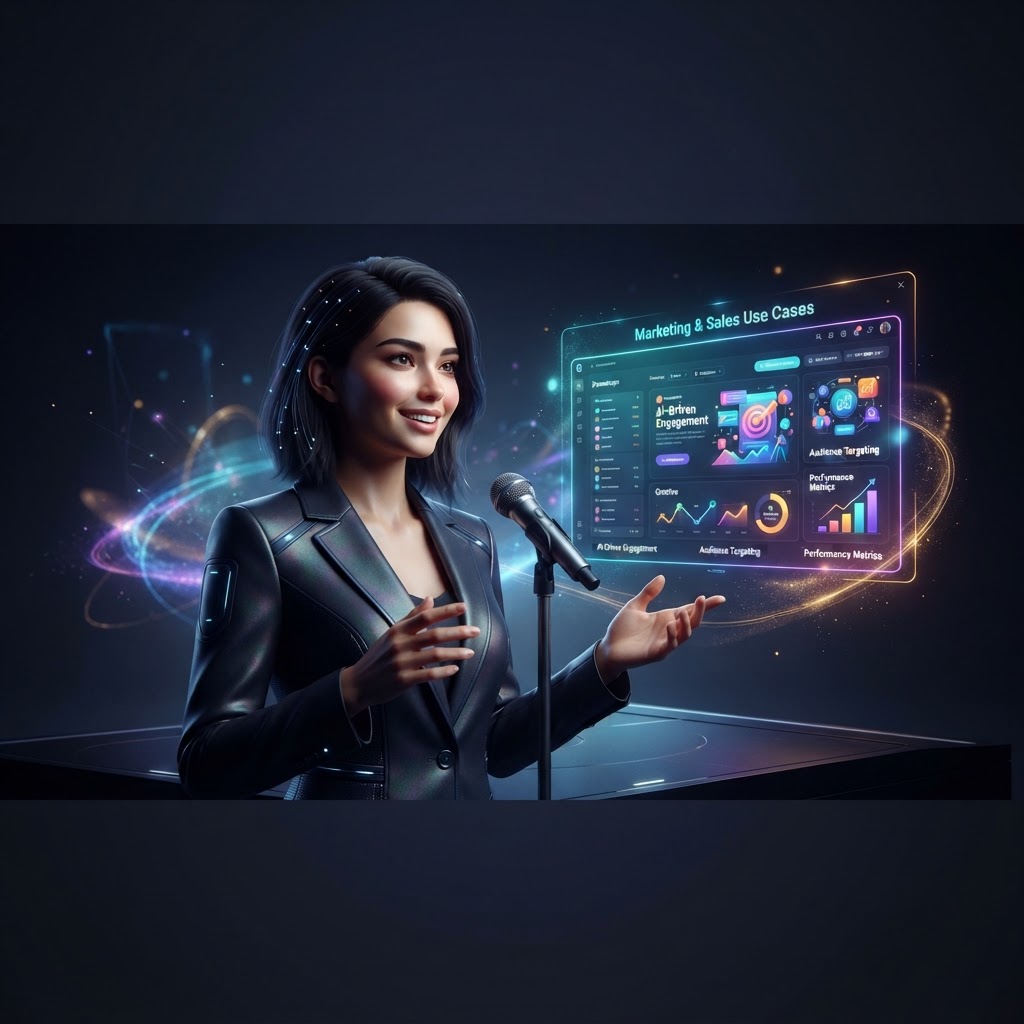
Marketing and sales teams are leveraging AI avatars to solve the problem of personalization at scale. In the past, creating a personalized video for every prospect was a manual, time-consuming process that was impossible to sustain. Today, sales teams can use tools like HeyGen to generate thousands of unique outreach videos, where the avatar addresses each prospect by name, company, and specific pain points. This level of personalization significantly boosts engagement rates and shortens the sales cycle.
In the marketing department, AI avatars are being used to create high-quality explainer videos and social media content without the need for expensive production crews. Whether it is a product launch, a feature update, or a brand awareness campaign, marketers can now produce studio-quality video content in-house. This allows for a more rapid testing of creative concepts, enabling teams to iterate based on real-time performance data rather than relying on intuition.
Moreover, the consistency provided by AI avatars ensures that the brand identity remains intact across all channels. By using a 'digital twin' of a company spokesperson or a custom-branded avatar, organizations can maintain a unified presence on TikTok, LinkedIn, and their own websites. This consistency builds trust and recognition, which are essential in an increasingly crowded digital marketplace where attention is the most valuable currency.
The 2026 Landscape and Future Outlook
As we look at the state of the industry in 2026, it is clear that AI avatars have moved beyond the 'gimmick' phase. The technology is now a mature, enterprise-ready solution that is being integrated into the core workflows of Fortune 100 companies. The focus has shifted from simply 'creating an avatar' to 'managing a digital workforce.' This includes better governance, security, and integration with existing CRM and ERP systems.
Looking ahead, the next frontier is the integration of real-time, interactive AI agents. While current platforms are largely focused on one-way video output, the future lies in avatars that can engage in live, two-way conversations. This will open up new possibilities in customer service, where a digital assistant can handle complex inquiries, process claims, and provide personalized advice in real-time, 24/7. The technology is already being tested in pilot programs, and we expect to see widespread adoption by the end of the decade.
For organizations, the message is clear: the time to experiment is over. The competitive advantage now lies in the ability to effectively deploy these tools to enhance communication, reduce costs, and scale operations. Those who embrace this shift will find themselves with a significant edge, while those who wait may find it increasingly difficult to keep pace with the speed of modern digital content.
Strategic Implementation for Enterprises
Implementing AI avatars at an enterprise level requires more than just a subscription to a platform; it requires a strategic approach to governance and content strategy. Organizations must first define their use cases clearly—whether it is for internal training, external marketing, or customer support—and select the platform that best aligns with those goals. Security and data privacy should be the primary considerations, ensuring that the platform is SOC 2 compliant and that customer data is not used to train public models.
Once the platform is selected, the focus should be on building a library of high-quality assets. This includes creating custom avatars that reflect the company’s brand identity and training voice models that sound natural and professional. It is also essential to establish a workflow that allows for easy collaboration between content creators, legal teams, and stakeholders. By treating AI avatars as a core component of the company’s digital infrastructure, organizations can ensure that their content remains consistent, scalable, and effective.
Finally, it is important to maintain a human-in-the-loop approach. While AI can handle the heavy lifting of production, the creative direction and strategic oversight must remain in human hands. By combining the efficiency of AI with the nuance and empathy of human expertise, companies can create a digital presence that is not only efficient but also deeply resonant with their audience. This balance is the key to success in the age of the digital presenter.