How Can I Make Extra Money by Selling Printable Botanical Art?
A beginner-friendly guide to entering the print-on-demand market with AI-assisted botanical design.
You can generate consistent, high-quality botanical art using AI tools like Midjourney or DALL-E 3, then sell these as digital downloads on Etsy. By focusing on a specific aesthetic—such as 'vintage cottagecore' or 'minimalist line art'—and selling sets rather than single images, you can build a scalable, low-overhead passive income stream.
Learn how to leverage AI to create and sell botanical art prints online. This guide covers niche selection, AI generation, and marketplace strategies for beginners.
Why Botanical Art is the Perfect Entry Point
Botanical art is a high-demand, evergreen niche that is exceptionally well-suited for AI generation. Because nature-inspired designs rely on patterns, textures, and organic shapes, AI models excel at producing high-quality, aesthetically pleasing results that require minimal manual editing. Unlike complex portraiture or hyper-realistic scenes, botanical prints are forgiving and highly versatile, making them ideal for beginners who want to start selling quickly.
To succeed, you must move beyond generic 'flower' prompts. The most profitable sellers dominate specific sub-niches, such as 'mid-century modern botanical sketches,' 'dark academia pressed flowers,' or 'minimalist line-art succulents.' By focusing on a specific style, you create a brand identity that encourages customers to buy multiple pieces from your shop rather than just one.
Starting with digital downloads is the most efficient path. By selling files that customers print themselves, you eliminate the costs of inventory, shipping, and physical production. This keeps your profit margins at nearly 100% and allows you to focus entirely on curation and marketing.
How to Generate Consistent Collections
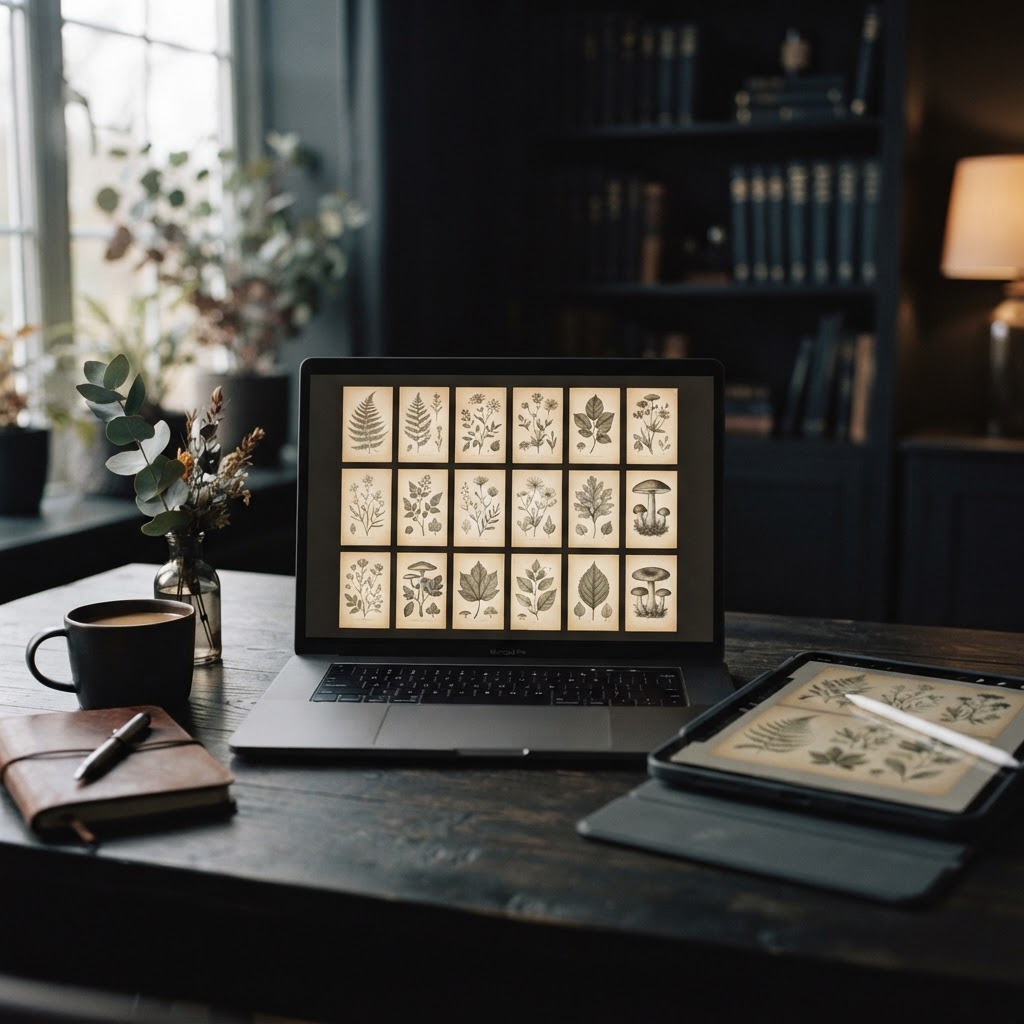
Consistency is the primary factor that separates professional shops from amateur ones. If your shop features a mix of watercolor, oil painting, and line art, customers will struggle to find a cohesive set for their walls. Use a 'style anchor' in your prompts—such as 'vintage botanical illustration, muted color palette, cream paper texture, high detail'—to ensure every image in a collection feels like it belongs together.
When generating, do not settle for the first result. Use tools like Midjourney or DALL-E 3 to create 20-30 variations, then ruthlessly curate the top 30%. A set of six matching prints will always outperform six unrelated images. You can use platforms like Flower Language to identify which specific plant species or color palettes are currently trending, ensuring your designs align with what buyers are actively searching for.
Once you have your images, use an AI upscaler to ensure they are print-ready at 300 DPI. High-resolution files are non-negotiable for wall art. If a customer prints your file and it looks blurry, you will lose your reputation and face refund requests. Always test your files by printing them at home before listing them for sale.
Listing and Selling for Maximum Visibility
Etsy remains the most effective marketplace for printable art, but success depends on how you present your listings. You must disclose that your work is AI-assisted, as per Etsy’s transparency policies. This does not hurt your sales; in fact, buyers value the honesty and the unique, high-quality designs that AI can produce.
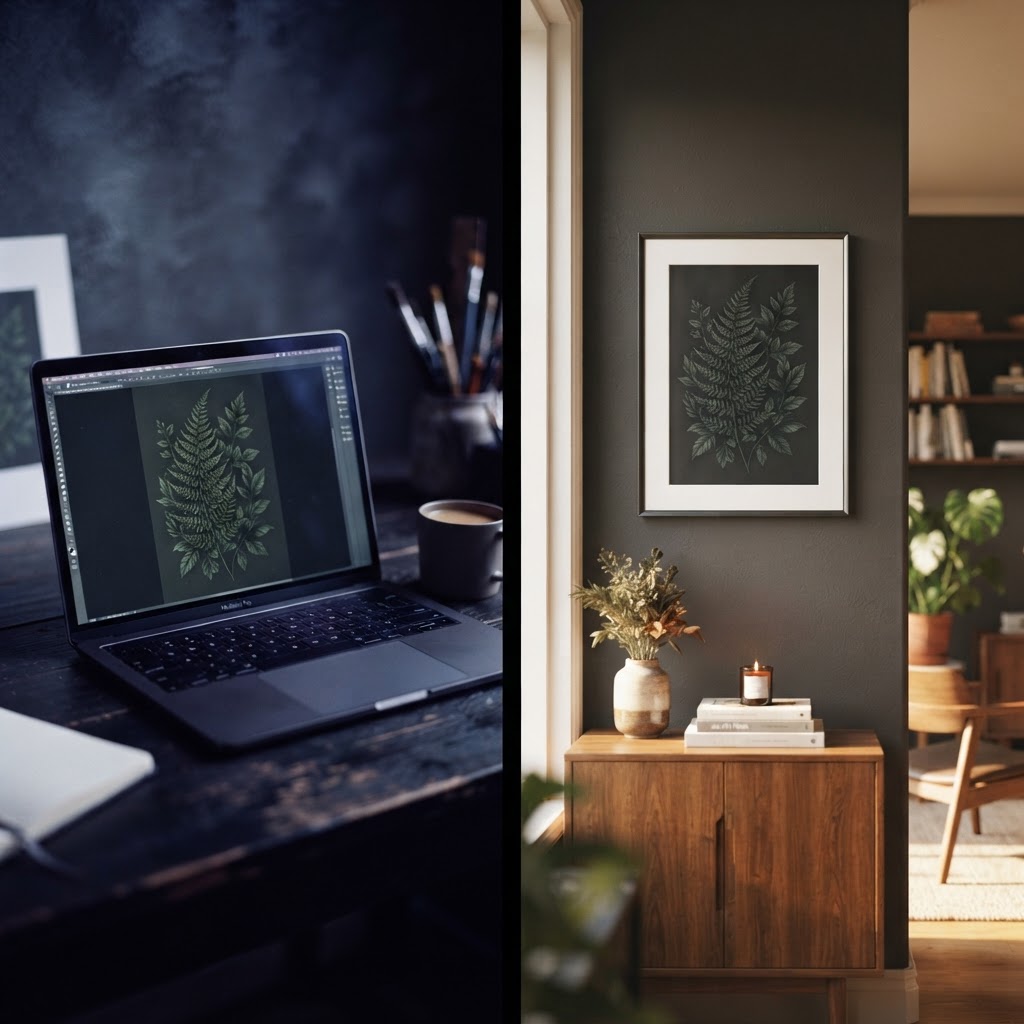
Your listing photos are your most important marketing asset. Do not just upload the raw image file; use mockup tools to place your art in a beautifully decorated living room, nursery, or kitchen. Seeing the art in a real-world context helps the buyer visualize the product in their own home, which significantly increases conversion rates. Use descriptive, long-tail keywords in your titles and tags, such as 'boho botanical wall art set' or 'printable plant illustration for office decor.'
Finally, price your work strategically. Avoid the 'race to the bottom' by pricing your prints too low. A single print should typically range from $5 to $15, while a curated set of three to six prints can command $15 to $40. Pricing too low signals low quality to the buyer and makes it difficult to cover the time you spent on curation and shop management.
Botanical Art Launch Checklist
- Define a specific aesthetic niche (e.g., vintage, minimalist, or boho)
- Generate a cohesive collection of 10-20 images using a consistent prompt structure
- Upscale images to high resolution for professional print quality
- Create lifestyle mockups to show how the art looks in a room
- List as digital downloads on Etsy with clear AI-disclosure tags
- Use Flower Language to research trending botanical themes and seasonal demand