
The Autonomy Gap: Why Agentic Workflows Are Replacing AI Generators
Moving beyond simple prompts to end-to-end autonomous infrastructure.
Standard AI content generators require constant human prompting, whereas autonomous agentic workflows like SiteFlow AI and EtsyEmpire AI execute entire production cycles independently. This shift from reactive chatbots to proactive infrastructure allows businesses to decouple output volume from headcount.
Why is the chatbot era ending?
The fundamental limitation of standard AI tools is that they are reactive. Whether you use ChatGPT or Claude, the system sits idle until you provide a prompt. This creates a structural bottleneck where your productivity is capped by the time you spend typing instructions. You are not leveraging AI; you are merely outsourcing individual tasks one at a time. This is helpful for a single draft, but it fails to scale as a business operation. The transition to agentic AI represents a shift from using a tool to deploying infrastructure. In 2026, the winners are those who stop prompting and start building autonomous pipelines that run without human intervention.
What defines an autonomous agentic workflow?
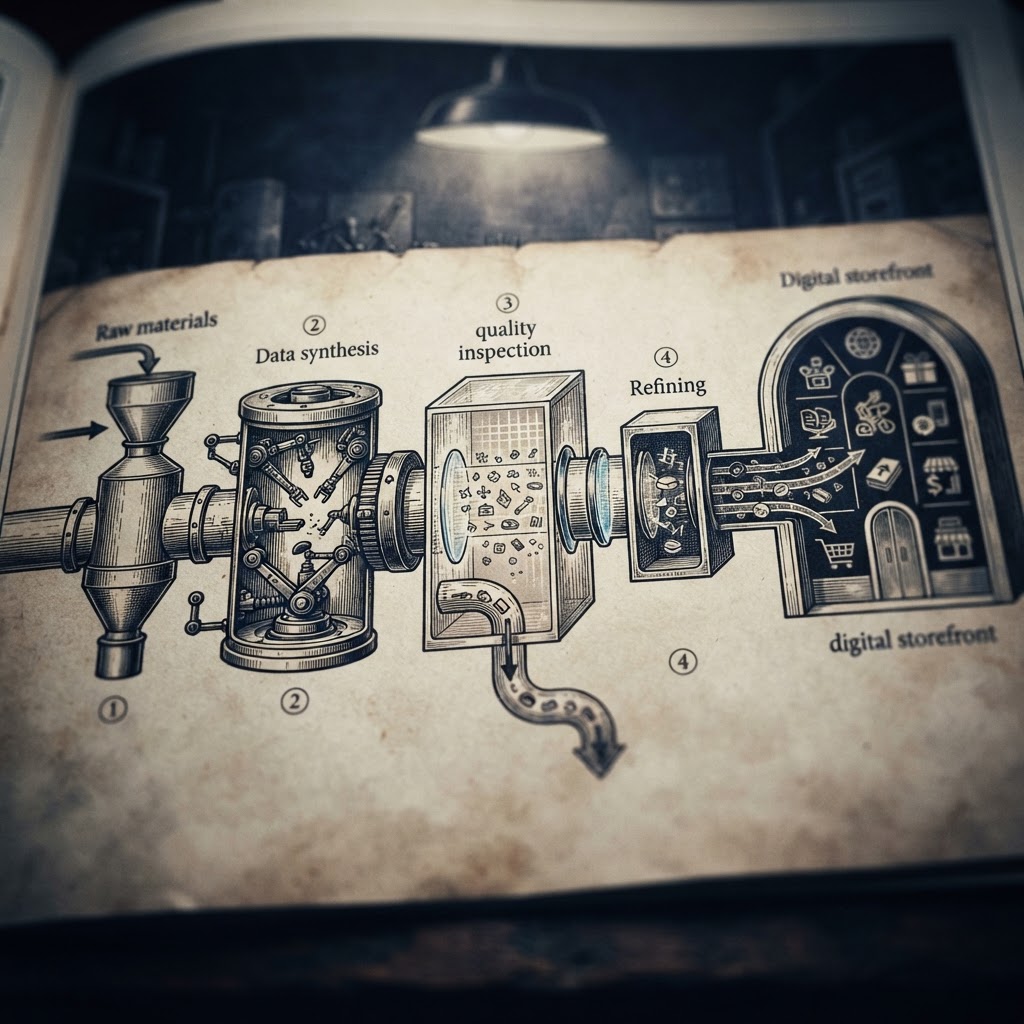
An autonomous workflow is a multi-agent system where specialized AI units handle distinct parts of a process. One agent might perform keyword research, another writes the draft, a third handles SEO optimization, and a fourth manages the final deployment to your CMS. Unlike a chatbot, these agents interact with your existing tools via APIs. They make decisions based on predefined goals rather than waiting for a human to click 'generate.' This decoupling of production capacity from human headcount is the defining characteristic of the current AI landscape. You set the strategy, and the agents execute the tactics.

How do tools like SiteFlow AI change the game?
SiteFlow AI is a prime example of the new guard of end-to-end platforms. Instead of just generating text, it manages the entire lifecycle of web content. It monitors search console data, identifies content gaps, generates the article, optimizes it for SEO, and pushes it live to your site. This is not content creation; it is content infrastructure. By automating the handoffs between research and publishing, SiteFlow AI eliminates the 'human-in-the-middle' friction that slows down traditional marketing teams. It allows a single operator to manage a volume of content that previously required a full department.
Can EtsyEmpire AI automate e-commerce growth?
EtsyEmpire AI applies the same agentic logic to the e-commerce sector. It doesn't just write product descriptions; it manages the store's inventory visibility. The system monitors market trends, adjusts pricing, creates SEO-optimized listings, and manages customer engagement loops. By integrating directly with the Etsy API, it functions as a silent partner that works 24/7. This is the difference between a tool that helps you write a description and a system that manages your revenue stream. It is the shift from 'AI-assisted' to 'AI-autonomous' that defines the current market leaders.
How do you build a custom agentic stack?
If you are looking to build your own workflow, start with 'YouTube Automation Skills - Built for Claude AI.' This framework allows you to chain Claude’s reasoning capabilities with external tools to automate video production. First, define your goal: for example, turning a blog post into a video script. Second, connect your research agent to your RSS feed. Third, use a script-writing agent to format the output for your video editor. Finally, set a human-in-the-loop checkpoint for final approval. By focusing on the workflow rather than the individual prompt, you create a system that improves with every iteration.
What are the risks of full autonomy?
The primary risk of autonomous workflows is 'drift'—where the AI begins to optimize for the wrong metrics. Without proper guardrails, an agent might prioritize keyword density over brand voice or factual accuracy. This is why the most successful implementations include 'quality inspection chambers.' These are automated checkpoints where a secondary agent reviews the output against a strict brand governance rubric before it is allowed to proceed to the next stage. You must treat your AI agents like junior employees: give them clear objectives, provide them with a style guide, and verify their work at critical milestones.
Is it time to abandon standard generators?
You do not need to abandon standard generators, but you must stop relying on them as your primary production method. Use ChatGPT or Claude for brainstorming and one-off tasks. Use agentic platforms like SiteFlow AI or EtsyEmpire AI for your core business operations. The gap between those who use AI as a chatbot and those who use it as infrastructure is widening rapidly. If your current workflow requires you to be present for every output, you are not scaling—you are just working faster. The future belongs to those who build systems that work while they sleep.