
You are currently losing hours because you treat audio as a final, immutable file rather than editable data. To stop the re-recording cycle, you must shift to a text-to-speech platform that treats voiceovers as version-controlled text, allowing you to update specific lines instantly without re-recording the entire production.
The silent tax on your weekly content output
It is Tuesday at 7:00 PM. You have a training module, a podcast clip, or a product update that needs to go live tomorrow morning, but you just realized the specs changed. That is the moment the dread sets in because you know that updating the script means returning to the microphone. You are already tired, your throat is dry, and you know the next two hours will be spent trying to match the tone of the original recording you finished three weeks ago. Most professionals in your position have simply stopped updating their content because the manual labor of re-recording is too high a price to pay.
You are not just losing time; you are losing the ability to keep your work relevant. When the cost of an edit exceeds the value of the update, your content dies. You leave outdated tutorials on your site because the thought of recording the correction feels like a mountain you cannot climb. This page is not about how to be a better narrator; it is about how to stop being one entirely.
We are going to dismantle the assumption that professional video requires a recording booth. I have spent years helping teams move away from the high-friction world of studio-grade hardware toward a software-first approach. By the time you finish this page, you will know exactly how to turn your text into a living, editable asset that you can update in seconds, not hours. If you are tired of the re-record cycle, you are in the right place.
The Content Agility Evaluation Matrix
- Atomic editing: Can you regenerate single sentences without touching the rest of the file?
- Temporal cost: Does a ten-word change cost you five minutes or five hours?
- Voice consistency: Will the new narration match the tone and pacing of the original?
- Localization scale: Can you swap languages as easily as you swap paragraph blocks?
- Friction baseline: Does your process require hardware, software, or just a keyboard?


Ready to stop the re-recording cycle?
Start building your content library faster than you ever thought possible.
Learn how it worksStop the manual recording loop today
Your content is too valuable to sit in an outdated, un-editable format. With Fliki AI, you can convert your existing text into polished video assets that update as fast as you can type. It is time to treat your audio like software.
- Cut production time by 90% immediately.
- Update any line without re-recording the entire script.
- Scale to 80+ languages without the cost of human translators.
The hidden cost of the traditional recording loop
The actual cost of a manual voiceover is not the microphone; it is the opportunity cost of the hours you spend trapped in a re-take loop. For every minute of finished audio you produce, you likely spend at least thirty minutes in the recording, editing, and quality-assurance cycle. If you produce two hours of content a month, you are effectively losing an entire work day to audio production alone, excluding the time you spend re-recording when a minor detail changes. This is the hidden tax that keeps your content library stagnant and your growth slow.
Consider the financial impact of the update process. Every time a product detail shifts, a compliance policy changes, or a date expires, you pay the penalty twice: once in lost production time and once in the reduced trust of your audience who are consuming stale information. When the cost of maintenance is high, you prioritize silence over accuracy. You stop posting, you stop updating your courses, and your authority in the market begins to slip.
This is a structural problem, not a personal one. You are trying to treat audio as a fixed-media asset in an industry that demands real-time agility. Every hour you spend in a recording booth is an hour you are not spending on strategy, distribution, or high-value creation. You are essentially choosing to be a junior audio engineer at the expense of your actual job title. We need to reset your expectation of what it takes to deliver high-quality narrated video.
Why the standard recording advice fails you
Conventional advice will tell you to buy a better microphone, dampen your room, or hire a voice actor, but all these suggestions ignore the reality of your changing requirements. These tactics are designed for studio production, not for the rapid-fire, iterative world of modern professional content. Hiring a voice actor for every minor update is financially unsustainable, and building a home studio only tethers you more tightly to a physical location, further increasing the friction required to get a file exported.
Trying to solve your bottleneck with better hardware is a trap. If your problem is that you have to re-record an entire track because of a two-word mistake, buying a $500 microphone does nothing to help. It only makes the re-recording sound slightly crisper. You are adding complexity to a process that should be removed entirely, not optimized for higher fidelity. The goal is not better sound; the goal is total content velocity.
Furthermore, the expectation of a human voice is becoming less of a requirement for standard training or informational content. Your audience cares about clarity, pacing, and current information. They do not care if the narration was generated by a software engine as long as the delivery is professional and consistent. By clinging to the traditional model, you are failing to meet the modern standard of information delivery: fast, accurate, and accessible.
The numbers behind the problem
11 hrs
Avg weekly time wasted on recording
$1,200
Estimated cost of studio-quality editing
4 days
Time to update a complex course
90%
Reduction in iteration time


Ready to stop the re-recording cycle?
Start building your content library faster than you ever thought possible.
View feature demoThe criteria for a modern video workflow
To escape the recording trap, you must switch your criteria from audio quality to audio elasticity. Your new standard must prioritize the ability to manipulate the voiceover as data, ensuring that your content can live, breathe, and adapt as your knowledge base expands. A tool that produces a great voice but locks you into a static audio file is a liability. You need a system that treats narration as text, where the source remains editable forever.
Consistency is your new north star. In a traditional workflow, your voice changes based on your fatigue level, the time of day, and the environmental noise of your room. By shifting to a consistent, high-fidelity AI-driven platform, you ensure that every module, every clip, and every update sounds identical regardless of when it was created. This builds trust with your audience, who will come to rely on the professional, uniform quality of your materials across your entire brand.
Finally, look for multi-format integration. A tool that handles both the narration and the visual pacing, such as timing captions to the spoken word, is essential. You want a tool that understands the synchronization of media elements. If you have to move your audio into a separate video editor, you are just recreating the same friction you are trying to solve. Look for the system that handles the entire pipeline, from raw text to rendered output, in one interface.
What the fix actually looks like in practice
The transition to a software-first audio workflow allows you to treat your video library as an extension of your CMS, where updates are triggered by a simple text edit. Instead of clearing your schedule to record a new module, you open the project, type the change into the script, and hit a refresh button. Within seconds, the specific section of the audio is replaced, the pacing adjusts to the new text, and your video is ready for export. This is how professionals scale without the need for an army of producers or a permanent sound booth.
Imagine your content production life after this shift. Your weekly clips are scheduled on Friday, your course updates happen in minutes during a coffee break, and your library remains perfectly accurate. You are no longer held back by the fear of making a mistake in your script, because you know that correction is cheap and fast. You move from a reactive, stressed production schedule to an agile, proactive content strategy that serves your audience better.
This shift is about reclaiming your autonomy. You no longer need to rely on the mood of a narrator or the availability of a studio. You become the editor of your own knowledge, capable of pushing updates the moment they are identified. This is the new standard for professional production, and it is the only way to keep your content competitive in a market that rewards speed as much as it rewards expertise.
Ship more with less effort
Stop letting technical barriers prevent you from publishing the content that builds your authority.
- Turn text into video in under five minutes
- Generate voiceovers in over 80 languages
- Regenerate specific lines without full re-takes
What you actually get, feature by feature
Atomic Line Regeneration
This feature allows you to update single sentences without needing to regenerate the entire video file.
Multi-language Voice Library
Access hundreds of voices across 80+ languages to match your audience regardless of their geographic location.
Text-Synced Visual Timing
Automatically align your visual media and captions with the exact pacing of the narration for professional flow.
Professional Voice Tones
Choose from a variety of emotional and stylistic vocal profiles to suit training, explainers, or promotional content.
Centralized Project Management
Manage your entire video library within a single dashboard, keeping your assets organized and ready for fast updates.
No-Hardware Rendering
Produce studio-grade audio outputs entirely in the cloud, removing the need for microphones or booth setups.
What happens when you trade your microphone for text
A week after you switch to a text-based workflow, you will realize you are no longer hoarding draft scripts in your folders. You will open your project, tweak a phrasing error, and hit regenerate, effectively finishing in ten minutes what used to consume a Tuesday afternoon. Your content pipeline stops being a high-pressure performance and starts being an editing process similar to polishing an email. You no longer dread the mistake in the middle of your narration because it no longer requires a twenty-minute re-recording session to fix. By treating your voiceover as data, you remove the barrier between a finished idea and a published piece. Your consistency increases not because you are working harder, but because you are no longer paying the hidden tax of physical recording cycles. This efficiency gain provides the time back to focus on the actual quality of your message rather than the mechanical stress of getting the take right. You will see your output frequency double within the first seven days simply because the friction of the record button has been removed from your desk.
Addressing the skepticism of AI voice quality
You are likely worried that the output will sound robotic, or that you are paying for a tool that creates more work in quality control. The reality is that modern voice engines now capture nuance, pace, and professional tone that mimic high-end studio recordings so closely that your listeners will not distinguish the difference. If you are concerned about cost, compare the annual subscription price to the hourly wage of a sound engineer or the value of the six hours of billable time you currently lose every week to manual re-recording. The investment pays for itself within the first month by giving you back those lost hours, which at any reasonable professional rate, exceeds the annual cost of the platform. Finally, you might feel the learning curve is steep, but the interface is essentially a document editor where you simply swap text and choose voices. You are not learning an audio engineering suite; you are learning how to paste text into a window and click play.


Ready to stop the re-recording cycle?
Start building your content library faster than you ever thought possible.
Start your trialThe true cost of staying with your manual setup
Staying with your current manual recording workflow for another six months is costing you thousands of dollars in lost productivity and missed opportunities to scale. If you lose five hours a week to the recording cycle, six months of inaction equals 130 hours of your professional time simply thrown away. You could have produced over a hundred additional content modules or training assets in that same period, expanding your market presence and your authority. Every week you delay, you are effectively paying an invisible premium to remain anchored to a microphone and a booth. This is not just a loss of time, but a loss of momentum that prevents your brand from staying relevant in a fast-paced environment where volume and clarity determine who gets heard. By doing nothing, you are choosing to accept the frustration of your current setup as a permanent fixture, ensuring that every piece of content you produce in the next half-year will continue to be a source of stress rather than an asset for your business.
The final decision on your production strategy
You are at a point where you must decide if your current recording method is a deliberate choice or a habit you have outgrown. If you want to continue spending your evenings in a quiet room obsessing over microphone levels, your current process is fine, but it is not built for growth. If you are ready to treat your video production like a modern professional, the decision is to move your script management to a platform that removes the recording burden entirely. You have all the data you need to know that your current method is leaking time and limiting your reach. Choosing a text-based narration platform is not an experiment, it is a necessary upgrade to your operating system. It allows you to ship more, move faster, and stop letting small edits dictate your schedule. You can continue to force yourself to re-record, or you can start letting your content work for you starting today.
What this actually looks like
Straight talk: the pros and the cons
What you get
- Regenerate single sentences without re-recording full scripts.
- Access hundreds of lifelike voices in over 80 languages.
- Embed visuals and captions directly alongside the narration.
- Eliminate studio sessions, microphones, and professional voice actors.
- Maintain high-quality audio consistency across massive content libraries.
Worth knowing
- Not suited for high-emotion, theatrical, or improvisational voice performances.
- Occasional nuances in regional dialect still require manual pronunciation tuning.
- Cloud-based processing requires a stable internet connection for rendering.

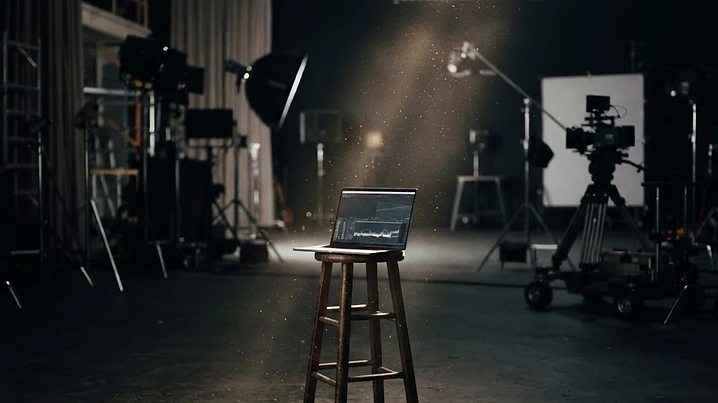
Replace the studio with a browser
Eliminate the physical recording loop and focus on your script, not the audio files.
- No microphone or recording booth required
- Access hundreds of professional-grade voices
- Sync visuals and captions in real-time
How it works, step by step
- 1
Step 1
Paste Your Draft
Input your script directly into the editor without worrying about recording hardware.
- 2
Step 2
Select Voice Style
Choose from a range of voices that match your brand’s specific professional tone.
- 3
Step 3
Automate Visuals
Pair your narration with stock media or your own uploads to create instant context.
- 4
Step 4
Review and Edit
Make changes to any single line of text and listen as the AI adjusts the audio instantly.
- 5
Step 5
Render and Ship
Export the final production ready for deployment across any platform you manage.
Your roadmap: what the first 30 days look like
- 1
Day 1
Initial Setup
Upload your existing script and generate your first narration in minutes.
- 2
Week 1
Workflow Integration
Replace your traditional recording sessions for all short-form content.
- 3
Week 2
Scale Production
Increase your output frequency by repurposing text into video assets.
- 4
Month 1
Performance Review
Quantify the time saved compared to your previous manual recording process.
- 5
Month 3
Workflow Mastery
Systematize your entire video creation process around text-based editing.
Stop editing for the microphone
You have spent enough time fighting your own tools. By now, you know exactly where the bottleneck is: every time you need to fix a word, you are forced to re-record an entire track. This is not an audio problem, it is a structural one. In the next ten minutes, you can import a script into Fliki and have your first video ready in a fraction of the time it usually takes to set up your microphone. Do not let another week go by where you finish your day exhausted by a task that does not actually need to happen. The cost of your current workflow is showing up in your project delays, your missed shipping targets, and your own burnout. You have the choice right now to reclaim your time. If you decide to act, you will find that the process becomes predictable, manageable, and fast. Go to the dashboard, sign up, and create your first piece of content with the text you already have sitting on your desktop. See for yourself how much easier it is to edit a document than it is to re-record a voiceover. The transition takes less than a coffee break, but the time you save will compound every single day you use it. Do not look for a better time to change your process, because you have already identified that the current one is broken.
Ready to stop the re-recording cycle?
Start building your content library faster than you ever thought possible.
Get Fliki nowAffiliate disclosure: the links on this page are affiliate links. If you buy through them we may earn a commission at no extra cost to you. It never changes what we recommend.