
Use Fliki AI. It is the only tool that treats your video script like a document rather than a fixed audio file. By separating text from voice, it allows you to swap or edit single words without re-recording, saving you hours of frustration and keeping your content perfectly up to date.
The silent tax on your creative time
It is Tuesday evening, and you are staring at a cursor blinking on your screen. You have a thirty-second product explainer or a minute of course material that needs a tiny adjustment. A single word was mispronounced, or a pricing detail changed, and now your stomach drops. You know the drill: find the microphone, clear the room of background noise, do five takes to get the pacing right, and then spend another hour fighting with audio software to swap the clip. By the time you are done, you have burned ninety minutes on a thirty-second fix. That is your actual cost—not just the time, but the slow, painful death of your motivation to share ideas.
Most people assume this friction is simply the price of high-quality output. They believe that if they want a professional narration, they must pay the tax of constant, repetitive recording. This page is here to show you that the tax is optional. We are going to look at why your current process is bleeding your productivity dry and how you can move to a system where your voiceover is a living, breathing document that evolves alongside your script.
We will bypass the fluff and talk about how to stop the cycle of re-recording. By the end of this guide, you will know exactly how to use Fliki AI to treat your video content like a text file. You will stop spending your evenings acting as your own sound engineer and start spending them on the work that actually grows your business.
Criteria for professional video tools
- Must support partial regeneration to avoid full re-records
- Voices should sound natural rather than robotic or tinny
- Needs integrated visual library to avoid external editing apps
- Should handle multi-language needs without manual voice dubbing
- Interface must prioritize text-based editing over timeline complexity


Stop recording and start creating today.
Turn your text into video in minutes, not hours.
See how it worksStop recording and start creating
Your content belongs in front of your audience, not stuck on your hard drive because the audio isn't quite right. With Fliki, you remove the barrier between your best ideas and your finished videos.
- Edit content in seconds, not hours
- Professional voiceovers without the studio setup
- Scale your reach across dozens of languages
The hidden cost of manual voiceovers
The true cost of traditional recording is not the time spent in front of the mic, but the massive, unseen friction that stops you from updating your content. When a simple script update takes an hour to implement, you stop updating. Your training videos go stale, your product explanations become misleading, and your outreach clips lose their edge. You are paying a high price in missed opportunities every time you decide a project is not worth the re-recording hassle.
Think about your last month. How many times did you leave a video file untouched because you just could not face the recording booth again? If you record once a week and each session consumes two hours of prep, setup, and cleanup, you are looking at eight hours a month lost to purely technical busywork. That is a full workday gone every four weeks. If you value your time at fifty dollars an hour, that is four hundred dollars of pure labor lost to equipment setup and vocal fatigue.
This is not just about time; it is about the quality of the final result. When you record a long session, you naturally tire out. Your voice loses its energy halfway through, creating a noticeable quality drop between the first and last module. Your listeners notice that slump. They hear when you are tired or frustrated, and that erodes the professionalism of your brand. Using a digital process removes that variable entirely, ensuring every sentence has the same clarity as the first one you recorded.
Why traditional recording fails the modern pace
Traditional recording assumes that audio is a final, static object that must be created in one perfect go. The moment you press record, you lock yourself into a process where any mistake is a catastrophe. If you change a sentence later, the entire structure of the project shifts, forcing you to go back and fix the timing across the board. It is a rigid, brittle way to work in an industry that demands speed.
Most people try to fix this by spending thousands on external studios or professional voice actors. While that gives you a high-quality file, it introduces a new, massive bottleneck: dependency. You have to wait for the actor's schedule, pay for the revision, and hope they get the tone right the first time. If you realize on Friday morning that a specific term changed, your video is effectively dead until the next week. You are trading your own time for money, but losing your ability to be agile.
This dependency is why your content ends up feeling like a museum piece rather than a helpful resource. A professional piece of content needs to stay relevant. When the barrier to updating is high, you lose the ability to iterate. If you are not testing new headlines or tweaking your call to action based on what you see working, you are blind to your own results. You need a way to change the words without changing the entire output.
The numbers behind the problem
8 hrs
Average monthly time lost to re-recording
400
Cost in dollars per month of wasted labor
15 min
Time to produce a polished video with Fliki
80+
Languages available for instant narration

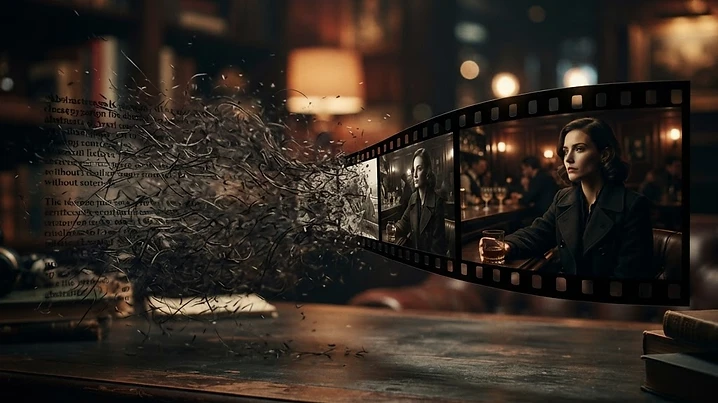
Stop recording and start creating today.
Turn your text into video in minutes, not hours.
Watch the 4-minute demoFinding the tool that actually scales
To scale your content, you must prioritize tools that treat narration as data that is easily manipulated. Look for software that separates the script from the audio file so that a change in text triggers an immediate, localized change in the audio. If you find yourself in a tool that forces a global re-render every time you fix a comma, you are still in the old world of fixed-file production.
You also need to evaluate the emotional resonance of the generated voice. If the software sounds like a robot reading a grocery list, no one will watch your content. The right tool provides voices with nuance—breaths, pauses, and natural emphasis. It should feel like a human colleague speaking, not a computer interface reading binary code to a listener. Test this by inputting a difficult, long sentence to see if the tool respects the punctuation and natural cadence.
Finally, check for the integration of visuals. A standalone voice generator might produce great audio, but it leaves you doing the heavy lifting in a video editor. The most effective setup pulls everything into one window. You want to match the visual to the voice in the same place you are editing the text. When you can see the subtitle align with the narration in real-time, you have effectively cut your production time by at least sixty percent.
The shift to text-based audio production
Moving to text-based audio production means you treat every video project like a Word document. Instead of recording, you write. Instead of mixing, you re-order words. This is the shift that separates creators who struggle to keep up from those who build massive libraries of high-quality, professional video content without ever buying a microphone.
In this new way of working, you start by pasting your script into the platform. The system identifies the pacing and applies a professional voice immediately. If you decide that the third paragraph needs to be shorter, you simply delete the text. The video regenerates the audio for that specific clip, keeps the rest of the file intact, and syncs everything automatically. You spend your energy on the strength of your argument, not the quality of your microphone cable.
This is not about being lazy; it is about focusing on the message. When you remove the mechanical stress of recording, you suddenly have the bandwidth to produce more content. You can repurpose one long-form video into ten bite-sized clips for social media in an afternoon. This volume creates a feedback loop where you learn what your audience actually wants, and because your process is agile, you can implement those lessons the very next morning.
Replace the recording booth with a browser tab
Stop waiting for the perfect quiet room to record your content. Your voice is important, but your time is the most valuable resource you have, and you should not be spending it on manual editing.
- Create high-quality audio from text in seconds
- Swap single words without re-recording entire clips
- Ship your content hours earlier every single week
What you actually get, feature by feature
Text-to-video narration
Turn written scripts into professional audio instantly so you never have to record again.
Multi-language voice support
Reach global audiences by converting your script into over eighty different languages effortlessly.
Individual line regeneration
Fix errors by updating only the necessary text, keeping the rest of your video file intact.
Stock visual library
Access thousands of images and clips to illustrate your point without needing a separate editor.
Automated subtitle generation
Keep your viewers engaged with captions that automatically sync to the timing of your narration.
Intuitive editing interface
Manage your entire production in a simple text-based dashboard that requires no sound engineering experience.
What your Tuesday looks like after you stop recording
Imagine you have a new product update to share. Instead of spending three hours preparing a script, checking your microphone levels, and doing take after take to avoid a stray cough, you spend twenty minutes typing. You paste your notes into Fliki, pick a voice that sounds like a human rather than a robot, and click generate. You spot a typo in the second paragraph, click that single sentence, and change the phrasing. The audio updates instantly without you needing to re-record a single other word. You finish the video, add your captions, and schedule it for your audience before your morning coffee is even cold. You have reclaimed your entire afternoon for actual strategy or customer calls.
Answering the reasons you are still holding back
You might worry that the voices will sound fake or that the software will be too complex to master in a single sitting. You are right to be skeptical of technology, but Fliki solves the unnatural tone problem by using models that include natural breathing and cadence, and it solves the complexity problem by stripping away the recording booth entirely. As for the price, compare it to the cost of a single professional studio hour or the hardware you would need to buy to match this audio quality. You are trading a small monthly subscription for hundreds of hours of saved time and the ability to pivot your content whenever you find a better way to explain your idea. If the tool does not work for your specific project, you lose nothing but the price of a coffee, but if it does, you solve the single biggest drag on your creative output.

Stop recording and start creating today.
Turn your text into video in minutes, not hours.
Create your first videoThe true cost of staying put for another six months
If you continue doing manual recordings for the next six months, you are looking at roughly two hundred hours lost to the mechanical parts of production. That is five full weeks of work where you are not growing your reach, not talking to clients, and not building your business, but instead fighting with a microphone. You are paying for your silence in missed opportunities, fewer videos posted, and the quiet exhaustion that comes from starting a project you know will take all night to finish. Every day you wait is another day where your content remains trapped as text because the friction of recording is too high. You are not just failing to ship a video; you are failing to reach the people who need your message right now.
Making the final call to change your production style
Deciding to use Fliki is a choice to prioritize your time over the outdated need to record your own voice. You have the script, you have the strategy, and now you have the tool that removes the final barrier between your idea and your audience. You do not need a studio, you do not need more equipment, and you do not need another night spent in a closet with a microphone. You simply need to move your text into an environment that respects your time. The decision is binary: you can keep recording the hard way and sacrifice your weekends, or you can use the right tool to do the work in minutes. Click below to start, and see exactly how much faster your next project comes together.
What this actually looks like
Straight talk: the pros and the cons
What you get
- Edit individual lines without regenerating the entire video
- Library of hundreds of lifelike, human-sounding voices
- Supports over eighty languages for global reach
- Built-in stock visuals and captions for quick production
- No microphone or recording environment setup required
Worth knowing
- Not a full-featured video editor for complex motion graphics
- Advanced lip-sync features are still evolving in accuracy
- Subscription costs may feel high for very low-volume users

Produce more by doing less
Consistency is what builds an audience, but consistency is impossible when every edit requires a massive time investment. With this tool, your editing speed matches your thinking speed.
- Access hundreds of voices for any project style
- Generate visuals that match your script automatically
- Update your existing content as fast as you can type
How it works, step by step
- 1
Step 1
Paste your script
Copy your text into the editor and choose your preferred voice and style.
- 2
Step 2
Select the voice
Choose from hundreds of lifelike, professional voices that match your brand.
- 3
Step 3
Add your visuals
Use the integrated library to drag and drop relevant images or video clips.
- 4
Step 4
Edit on the fly
Change a word or sentence instantly; the AI updates only that segment.
- 5
Step 5
Export and ship
Download your high-quality video and publish it to your social or training platform.
Your roadmap: what the first 30 days look like
- 1
Day 1
Setup and first render
Convert your first document into audio and see how the text-to-voice conversion works in real-time.
- 2
Week 1
Establish a new habit
Replace your weekly recording session with a ten-minute editing pass in the app.
- 3
Week 2
Expand your content mix
Use the saved time to turn your written newsletter archives into video clips for your social channels.
- 4
Month 1
Ship with confidence
Stop worrying about small errors and start updating your content library as soon as new information arrives.
- 5
Month 3
Gain back your time
Look back at the dozens of hours you would have spent recording and realize how much more work you have completed.
Your next ten minutes will change your production forever
Stop reading and do this right now. Open Fliki, take your most recent blog post or project note, and paste it into the editor. Choose a voice that sounds professional and click to see the result. If you do not have a script handy, take the last email you sent to a client and turn it into a quick update video. Within ten minutes, you will see your own words spoken back to you, perfectly timed and ready for export. You will realize immediately that the mountain of work you thought you had is actually just a molehill. If you walk away now, you are choosing to return to the same frustrations you felt this morning. But if you start this, you are choosing to never waste an evening on a voiceover session again. The friction you feel is real, but it is entirely optional. You have the solution in front of you; the only remaining variable is your willingness to let go of the old way of doing things. Click the button, create your first clip, and reclaim your time for work that actually requires your full attention.
Stop recording and start creating today.
Turn your text into video in minutes, not hours.
Get Fliki AI nowAffiliate disclosure: the links on this page are affiliate links. If you buy through them we may earn a commission at no extra cost to you. It never changes what we recommend.