You stop by switching to Fliki AI, which replaces your recording booth with synthetic narration that mimics human pacing and tone. It eliminates the need for expensive hardware, software expertise, and long nights of re-recording lines. You upload a script, select a voice, and export your professional asset immediately.
The Tuesday Night Bottleneck
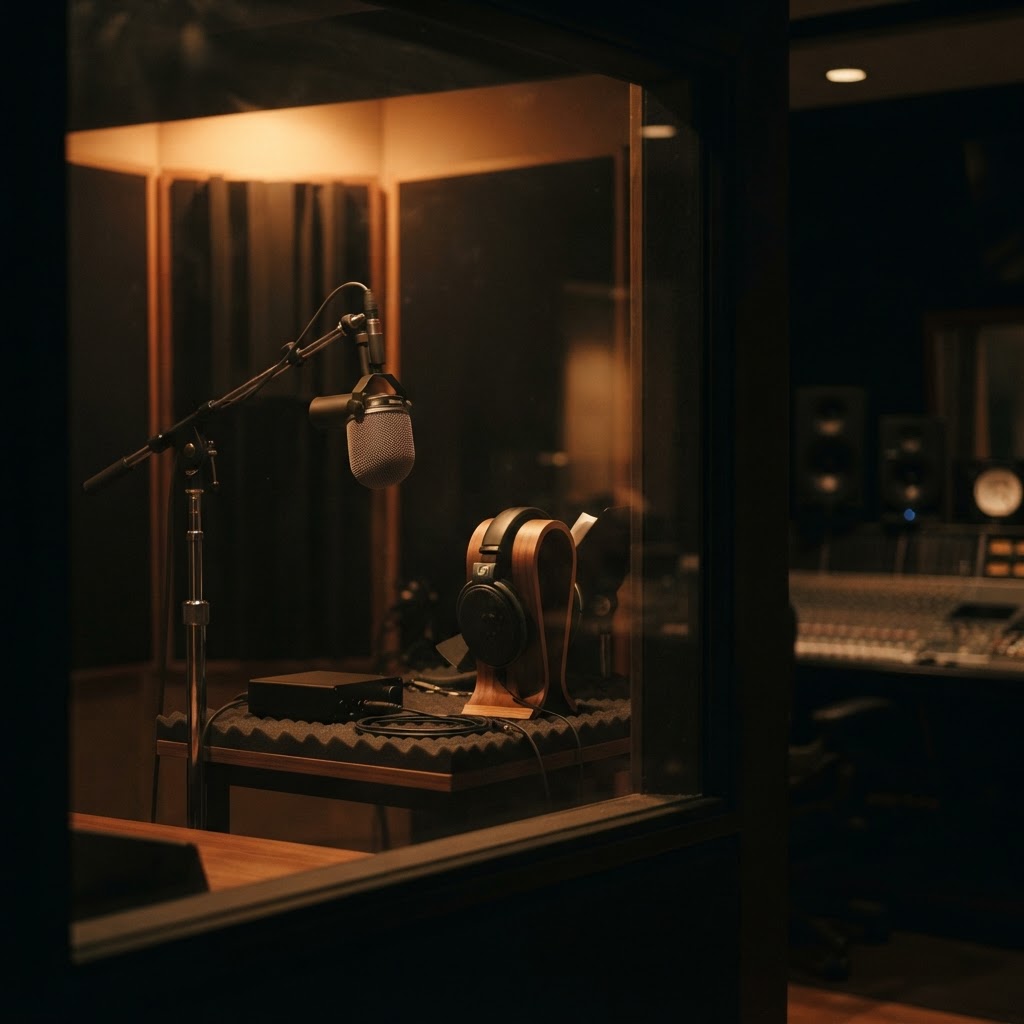
It is 8:30 PM on a Tuesday. Your laptop fan is whirring, the room is quiet, and you are trapped in a makeshift home recording booth. You are reading your own words into a microphone for the tenth time because you stumbled on a preposition, your voice sounds flat, or your neighbor just started their lawnmower. You have a great script that would help your team or your customers, but it is currently dead weight in your digital files. Every minute you spend hunting for the perfect take is a minute you aren't strategizing, leading, or actually building your business.
Most professionals try to fix this by buying better equipment. You get the expensive condenser mic, you download the complex editing software, and you watch three hours of tutorials on audio compression. But the hardware doesn't fix the exhaustion. The actual, soul-crushing bottleneck is not the gain on your microphone; it is the physical act of performing the audio yourself and the repetitive editing that follows. You are paying for a professional result with your most finite resource: your time.
This page is not about audio technology. It is about clearing your production desk. I am going to show you how to move from a script to a completed video asset in less time than it takes to set up your microphone. We are going to look at the math of your current workflow, the actual cost of holding onto the manual recording process, and how shifting to a dedicated AI narrator finally lets you ship your content instead of keeping it in the drafts folder.
Voiceover Workflow Selection Criteria
- Regeneration speed for single-sentence edits rather than full retakes
- Availability of lifelike voices across multiple global languages
- Ease of syncing audio narration with existing visual media
- Total time elapsed from text document to final render
- Hardware requirements and studio environment setup needs
Reclaim your evenings starting today.
Stop the manual recording cycle and start shipping.
Learn how it worksShip your next project tonight
Your content is too valuable to sit in a folder. Stop letting the recording booth stand between you and your audience.
- Eliminate your weekly recording stress immediately
- Scale your video output without hiring talent
- Maintain professional consistency across every single asset
What Does Manual Voiceover Actually Cost You?
Manual voiceover production costs the average professional roughly eleven hours of lost output per week. That is not just time spent in the booth; it is the time you lose to the cognitive overhead of recording, the frustration of editing out mistakes, and the fatigue that prevents you from tackling your creative work the following day. When you record yourself, you pay for your own time twice: once to write the content, and once to perform it.
If you value your hourly rate at two hundred dollars, that single night of recording is costing you four hundred dollars in direct labor, plus the opportunity cost of the project staying stuck in a draft. Projects that are stuck don't pay. Whether it is an internal training module or a customer explainer, the lack of a completed asset is a hole in your funnel. By the end of a month, you are looking at nearly fifty hours of wasted potential.
This is the hidden tax of the DIY perfectionist. You aren't being cheap by recording it yourself; you are actually being expensive. The cost of your time far outweighs the price of a tool that handles the narration for you. Every week that goes by without a system shift, you are throwing away a full working day of productivity. Once you recognize that the recording booth is a cost center rather than a badge of honor, the decision to automate becomes simple.
Why The DIY Studio Fix Fails Professionals
The usual attempts to fix the recording bottleneck fail because they focus on equipment rather than workflow. Professionals often assume that a better microphone or a quieter room will make the process faster, but these just move the problem from the audio quality to the performance quality. You still have to read, you still have to breathe correctly, and you still have to deal with the inevitable vocal fatigue that makes your voice sound different in every take.
Software updates and new plugins also promise help, but they usually just add more buttons to click. If you are using a standard digital audio workstation, you are essentially editing your own life away. When you find a mistake, you have to re-record the whole paragraph. That is a loop that destroys momentum. The technology assumes you want to be an audio engineer; it doesn't understand that you just want to get your message to the audience.
These methods fail because they ignore the reality of your schedule. You don't have time to be an audio engineer because you are already a specialist in your own field. Every hour you spend fussing with gain levels or de-essing a recording is an hour you are not doing the work you are actually paid to do. The DIY approach is a trap because it forces you to prioritize the wrong skill set. The best solution is one that allows you to delegate the entire performance to a system that doesn't need to rest, doesn't need a quiet room, and doesn't get tired.
The numbers behind the problem
11 hrs
Time lost per week
$2,200
Monthly cost of inaction
45 min
Time to record manually
5 min
Time to create with Fliki

Reclaim your evenings starting today.
Stop the manual recording cycle and start shipping.
View the featuresHow to Select the Right AI Narration Tool
The right tool for a professional isn't the one with the most bells and whistles, but the one that allows for the fastest iteration cycle. You need a platform that understands that your script will change. If your tool requires you to regenerate a five-minute audio file because you corrected one typo in the second paragraph, you are still in the bottleneck. A proper tool treats your script like a document, not a static recording.
Look for systems that emphasize granular control. You want to be able to change a single sentence and have the system output only that specific segment. This saves you from having to re-verify the entire production after a minor edit. If the tool lacks the ability to handle eighty-plus languages, you are eventually going to hit a wall when you want to expand your reach. You need the flexibility to keep your workflow consistent regardless of the target demographic.
Your criteria should also prioritize speed of synthesis. The delay between clicking save and receiving the file matters when you have five videos to produce before the end of the day. If the tool is bloated with unnecessary features that interfere with the core narration, you are losing speed. Demand a tool that is laser-focused on the text-to-narration pipeline, as that is the only part of your workflow that is currently breaking your back and wasting your Tuesday evenings.
What The New Production Workflow Looks Like
The shift away from the manual booth moves you to a desk-based workflow where you edit the script rather than the sound wave. You prepare your text in a document, you paste it into the system, and you iterate on the tone and pacing until it hits the mark. The physical fatigue of speaking into a microphone is gone, and the entire production is completed at your keyboard in minutes.
This changes the way you think about content volume. Because the barrier to production has vanished, you stop thinking about whether you have the time to record a video and start focusing entirely on the quality of the script. When a project is done, you don't look for mistakes in your voice delivery; you look for improvements in your messaging. Your role shifts from performer to director and editor.
This is the state of a professional who has reclaimed their evenings. You produce your weekly clips, your training modules, and your explainers in a single afternoon block. You finish your tasks on schedule, and when the sun sets on Tuesday, you aren't hiding in a cupboard with a microphone. You are finished, the content is shipped, and your time is yours again. This is the only way to scale your presence without losing your mind.
Sound human without the studio
Skip the microphone setup and the soundproofing. You get professional-grade narration that captures tone, emotion, and cadence perfectly every time.
- Hundreds of natural-sounding voices
- Support for 80+ global languages
- Adjustable speed and pitch controls
What you actually get, feature by feature
Granular Voice Regeneration
Edit only the specific line you need to change without re-rendering the entire project.
Global Language Library
Access hundreds of voices in over eighty languages to reach your entire audience.
Text-to-Video Synchronization
Automatically match your narration with relevant visuals and captions for a polished look.
Natural Pacing Engine
Utilize advanced AI that replicates human breath, pause, and emphasis for better listener engagement.
Studio-Grade Output
Produce clear, professional-grade audio files without the need for a physical studio or mic.
Rapid Iteration Workflow
Move from your initial script to a final exported asset in minutes rather than hours.
Proof of the New Velocity
One week after moving your production to Fliki AI, you will realize you have reclaimed roughly eight hours that you usually spend fighting audio equipment. Instead of spending Tuesday night re-recording a segment because a neighbor’s dog barked or your voice sounded tired, you simply edit the text and click update to refresh the narration. This is not about cutting corners, it is about shifting your energy from technical maintenance to the actual substance of your message. Imagine finishing your project on Wednesday afternoon and spending the rest of your week on strategy or client communication rather than fighting the hardware. You stop acting as a low-level audio technician and return to your actual role as a content creator. Because the barrier to entry is now just a text box, you stop waiting for the perfect window of quiet and start shipping assets in the pockets of time you already have. This is how you produce three times the output without adding a single hour to your work week.
Answering the Usual Hesitations
You are likely worried that the audio will sound robotic or that the monthly cost will be hard to justify against a free DIY approach. The reality of modern AI is that pacing and tone are no longer the issues they were two years ago, as the current engines use prosody modeling that mimics the natural rise and fall of human speech. If you are concerned about price, consider that one hour of your professional time is worth significantly more than the monthly subscription fee. When you calculate the cost of a microphone, a decent headset, a silent room, and the literal hours spent editing mistakes, the DIY studio is actually the most expensive option you have. As for the learning curve, there is effectively none because you are simply pasting text into an interface. If you can write an email, you can operate this tool, and you will find that the time you save in the first week alone pays for a year of access.

Reclaim your evenings starting today.
Stop the manual recording cycle and start shipping.
Start your first projectThe Real Cost of Waiting Six Months
If you continue to do this manually, you are looking at roughly 200 lost hours over the next six months that could have been used to grow your business or rest. That is five full weeks of work where you are effectively being paid for your voice acting skills rather than your professional expertise. You are trading your energy for a process that machines now perform better and faster. While you spend those 200 hours fiddling with levels and editing out coughs, your competitors are using tools like this to put out more consistent, higher-quality content that keeps them top-of-mind with your target audience. The price of your hesitation is not just the dollars you lose in inefficiency; it is the opportunity cost of all the projects you will never start because you are too exhausted from the recording process to even try. You are effectively paying a premium to stay stuck in a cycle of diminishing returns.
The Decision Point
The decision is simple: either you accept that manual recording is a permanent tax on your productivity, or you automate the bottleneck. You have already seen the logic; the manual way is a trap that keeps you buried in technical busywork while your actual work suffers. You do not need a studio, you do not need a new microphone, and you definitely do not need another late night at your desk. You only need to change your process to reflect the technology available today. By choosing to move your workflow to Fliki AI, you are choosing to prioritize your time and your sanity over an outdated habit. There is no risk in trying a new approach that promises to give you back hours of your life every single week. The only downside is that you will look back in a month and wish you had made the switch the moment you realized your recording sessions were consuming your evenings.
What this actually looks like
Straight talk: the pros and the cons
What you get
- Instant conversion of text to lifelike audio
- Partial editing regenerates single sentences
- Support for over eighty different languages
- No external microphone or booth required
- Built-in library of visuals and captions
Worth knowing
- Learning curve for advanced visual syncing
- Requires subscription for high-quality voices
- Not suited for raw, unscripted conversational styles
Iterate in seconds
Stop re-recording everything because of one typo. If your script changes, you only update the specific sentence, not the entire production.
- Instant text-to-speech regeneration
- Integrated visual and caption editor
- One-click export for any platform
How it works, step by step
- 1
Step 1
Paste your script
Copy your prepared text directly into the Fliki interface.
- 2
Step 2
Select the narrator
Choose from hundreds of lifelike voices to match your brand tone.
- 3
Step 3
Preview and polish
Listen to the narration and adjust pacing or pauses if needed.
- 4
Step 4
Regenerate specific lines
If you need a word change, regenerate only that specific segment.
- 5
Step 5
Final export
Download your high-quality video or audio file ready for distribution.
Your roadmap: what the first 30 days look like
- 1
Day 1
First Project Export
Convert your current backlogged text into a fully finished audio asset in under ten minutes.
- 2
Week 1
Build Consistency
Release your first series of automated content modules without an evening of recording.
- 3
Week 2
Refine Voice Selection
Establish a consistent brand voice across all your projects by saving your preferred settings.
- 4
Month 1
Master the Workflow
Shift your entire content output to the platform, saving 30+ hours of labor compared to last month.
- 5
Month 3
Full Content Scalability
Launch new formats like podcast clips and training courses that were previously impossible to produce.
Your Next Ten Minutes
You have a choice right now. You can close this page and return to the cycle of scripts sitting in your documents folder, waiting for that imaginary block of time you will never find. You will spend another hour tonight trying to get the audio right, then another tomorrow morning editing the file, and by the end of the week, you will be exactly where you are now—behind schedule and tired. Or, you can spend the next ten minutes creating your first project with Fliki AI. Go to the dashboard, paste a piece of text you have already written, and listen to the difference. Within five minutes, you will have a finished asset that is ready to share. You will see immediately that the barrier you have been fighting is artificial. Stop paying the studio tax on your own time. Click the button below, start the process, and see for yourself how much faster your workday moves when the recording booth is replaced by a few simple clicks. You have already wasted enough evenings on a manual process that offers you no competitive advantage; start the fix now.
Reclaim your evenings starting today.
Stop the manual recording cycle and start shipping.
Get Fliki AI nowAffiliate disclosure: the links on this page are affiliate links. If you buy through them we may earn a commission at no extra cost to you. It never changes what we recommend.