
Stop recording your own voiceovers. Use Fliki AI to convert your scripts into high-quality, natural-sounding audio and video instantly. It allows you to edit content at the speed of thought, bypassing the studio, the microphone, and the late-night sessions that keep you from your actual work.
The Tuesday Night Cost of Content Creation
It is 8:30 PM on a Tuesday. Your dinner is cold, your family is in the other room, and you are sitting in a makeshift closet studio, clutching a microphone. You have already recorded this same paragraph four times, and each time, you stumble over a word or hear an annoying clicking sound that you know will haunt you during the edit. You are not a professional voice actor, yet here you are, paying the toll of professional production with your personal time.
This is the reality of the traditional content workflow. You have a great script that would solve your customer's biggest problem, but it is trapped in a text document because the thought of recording it makes you want to delete the file entirely. The cost here is not just the lost hour of sleep; it is the fact that your content pipeline is blocked by a task you are objectively bad at, at a time of day when you are at your worst.
This page is for the professional who realizes that recording is the bottleneck. We are going to look at why your current setup is bleeding time and how shifting to a text-to-narration workflow changes your entire business model. You will see how to move from a production cycle measured in days to one measured in minutes, without ever opening an audio interface or stepping back into that closet.
Voiceover Production Selection Matrix
- Microphone hardware and soundproofing requirement
- Editing flexibility for single-line changes
- Total time elapsed from script to output
- Ability to localize into multiple languages
- Consistency of tone across weekly content

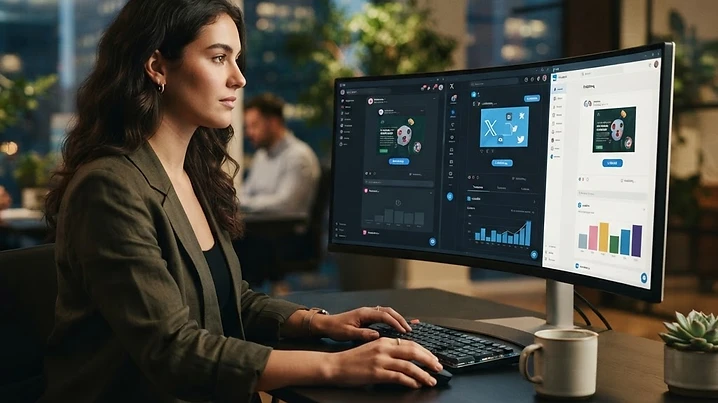
Stop recording your own voiceovers today
Automate your production and reclaim your evening hours for high-impact work.
See how it worksYour content is meant to be heard, not trapped in a draft folder.
You have the expertise, but you are losing weeks of progress to outdated production methods. It is time to let your text do the talking.
- Regain your Tuesday nights and stop the cycle of constant re-recording.
- Ship content at a professional cadence without needing a studio.
- Update your training and explainers instantly as your business evolves.
Why Your Current Recording Workflow Is Failing
The reason your content cadence keeps collapsing is that manual recording forces you to be both the writer and the performer simultaneously. By trying to record your own audio, you are creating a single point of failure where one stutter or a single mispronounced word ruins the entire take, forcing a total restart that wastes your evening.
You are not just losing the hour you spend recording; you are losing the psychological momentum required to produce work. Every time you dread the recording phase, you subconsciously delay the entire project. This lead time turns a simple two-minute explanatory video into a three-week ordeal. The actual work happens in the script, but the logistical weight of the recording session causes your content to go stale before it is ever published.
This cycle is a hidden tax on your growth. When you rely on your own voice, you are also tethered to your physical state—if you have a cold, are tired, or simply do not have a quiet room, production stops. You are currently paying for this inefficiency with missed publication deadlines, lower engagement due to inconsistent posting, and the constant, nagging guilt of content that stays in your drafts folder forever.
The Hidden Math of Your Production Bottleneck
Professional content production costs are best calculated in the hours you could have spent on strategy or client delivery. If you spend five hours a week recording and editing audio, you are burning over 200 hours a year—nearly six full work weeks—on a task that offers zero creative leverage beyond the script itself.
Think about the cost of that time. If your time is valued at even a conservative professional rate, you are effectively paying thousands of dollars per year to do a job that software can handle for a fraction of the cost. The financial loss is compounded by the opportunity cost: what would your revenue look like if those 200 hours were spent on client acquisition or developing new course material rather than fighting with a microphone and an audio editor?
The cost of waiting is not just the lost time; it is the cumulative effect on your brand authority. Your audience expects consistency. When your output is sporadic because you are too exhausted to record another voiceover, your market presence fades. The longer you maintain this manual workflow, the harder it becomes to regain the ground you lose to competitors who have already automated their narration and are shipping daily.
The numbers behind the problem
200 hrs
Annual time lost on manual recording
80+
Languages available for immediate scaling
90%
Reduction in production prep time
0
Microphones needed for professional output

Stop recording your own voiceovers today
Automate your production and reclaim your evening hours for high-impact work.
Watch the 4-minute demoCriteria for Choosing a Professional Narration Tool
The right narration tool must offer granular control over individual segments so you never have to re-record a full file. If a platform requires you to generate a ten-minute video just to fix one incorrectly stressed syllable, you have not solved your bottleneck; you have simply moved the friction to a new location.
Look for a tool that handles the synchronization of audio and visuals without manual alignment. The most effective systems allow you to update your script and have the audio and captions reflow automatically. This creates a state of modular production where your content is evergreen and easily updated; you should be able to swap a price point or a policy update in a video as easily as you would in a slide deck.
Finally, the tool must provide enough vocal variety to match your brand identity. You are not looking for robotic delivery; you are looking for pacing and cadence that allows for professional, natural communication. If the software cannot differentiate between a question and a statement in its inflection, the tool will fail the moment you ask it to represent your expertise. A mature platform prioritizes this nuance so you can trust the output the first time, every time.
How the Text-to-Video Workflow Changes Everything
Shifting to a text-to-video workflow means decoupling the creative act of writing from the logistical burden of performing. Once you paste your script into the engine, the recording becomes an automated output, and your primary role shifts to that of an editor rather than a technician.
This change allows for rapid iteration that was previously impossible. You can create three different versions of an introduction for an A/B test without ever stepping back into a studio. This modular approach allows you to scale your content output by ten or twenty times because you are only ever creating the source material, which is where your actual value as a professional lies.
After you make this shift, your Tuesday nights return to you. You stop thinking about audio quality, microphone gain, and background noise, and you start thinking about the effectiveness of your message. You become an architect of information, using a engine that treats your voice as a scalable asset rather than a physical chore. This is the moment you stop being a producer of audio and start being a publisher of content.
Edit your audio as easily as you edit a document
Your workflow becomes iterative rather than additive, removing the need to restart a project because of a single misspoken word or an updated statistic.
- Regenerate specific sentences without touching the rest
- Adjust pacing and tone with a single click
- Sync visuals instantly as you tweak the script
What you actually get, feature by feature
Text to Narration Conversion
Convert written scripts into professional audio instantly so you never have to touch a microphone.
Granular Line Editing
Regenerate only the sentences that need adjustment to save you from re-exporting entire files.
Global Language Support
Reach audiences in over eighty languages to expand your market influence without hiring translators.
Automated Visual Matching
Sync your audio with relevant stock media and captions to ensure your message is fully accessible.
Consistent Tone Branding
Keep your brand voice uniform across every piece of content, regardless of when it is produced.
Rapid Iteration Loop
Test and update your content in minutes to ensure your messaging stays current with your business needs.
The Tuesday Afternoon Workflow Realized
You will find that your production cycle shifts from days to minutes the moment you stop recording raw audio. Instead of prepping a sound-treated room, you now open your project, paste your finished draft, and listen to a playback within seconds. If a paragraph feels stiff or the pacing is off, you modify the text and click update, and the audio follows suit without a single re-record. You save six hours of vocal strain and setup time per week, time you currently burn on technical logistics instead of strategy. Your content library starts to grow because the barrier to entry is no longer physical equipment, but just the quality of your writing. You are trading a tedious studio routine for a simple editing interface that handles the heavy lifting, allowing you to finalize modules, social clips, and training videos during a standard coffee break rather than burning your evenings in a dark room.
Addressing the Hesitation Around AI Voice
You are likely worried that the audio will sound robotic, that the cost might not justify the output, or that you are losing your personal brand identity by using synthesized speech. If you choose a professional-grade tool, the nuance in prosody and cadence removes the robotic quality that plagued earlier AI, making it indistinguishable from human narration for ninety percent of your audience. The subscription cost for Fliki is a fraction of the hardware maintenance, software licensing, and lost billable hours you currently sink into your manual recording setup. You retain your brand voice through the scripts you write and the visual assets you control, ensuring the narration serves as a medium for your message, not a replacement for your personality. You are not hiring a robot to replace your intellect; you are deploying a machine to bypass the physical bottleneck of capturing audio so you can scale the reach of your existing expertise.


Stop recording your own voiceovers today
Automate your production and reclaim your evening hours for high-impact work.
Test your first scriptThe Cumulative Cost of Your Current Stagnation
If you continue to record manually for another six months, you will likely lose over two hundred hours that could have been spent on revenue-generating client work or professional development. That is five full working weeks sacrificed to the mechanics of microphone placement and audio editing, a price you pay in both lost earnings and psychological fatigue. Every week you delay is a week your competitors or peers occupy the space you should be in, as they ship content while you are still struggling with your third take of a ten-minute video. The cost is not just in the money you do not make, but in the momentum you never build. By the time you finally decide to move to an automated workflow, you will have spent enough money in lost time to have covered years of software subscriptions, all while leaving your best ideas sitting as stagnant text in your drafts folder.
The Practical Decision Before You Today
You have to choose between keeping the studio setup that drains your energy and moving to a production method that treats your time as a limited asset. The decision is binary: either accept that voiceover work is a manual, low-leverage activity that will continue to consume your evenings, or automate the bottleneck and reclaim those hours for higher-leverage tasks. You have seen how the math breaks down and why the manual process is the primary reason your content queue is failing. There is no hidden complexity here, only the choice to continue a practice that no longer serves your professional goals. The tools are ready, the workflow is proven, and your audience is waiting for the material you have not yet found the time to record. The shift happens the moment you prioritize your output over the habit of being the one behind the microphone.
What this actually looks like
Straight talk: the pros and the cons
What you get
- Eliminates need for physical recording hardware
- Regenerate individual lines without re-recording audio
- Supports over 80 languages for global reach
- Integrated visual and caption editor included
- Consistent voice branding for every project
Worth knowing
- Requires careful script review for nuance
- Limited control over extreme vocal intonations
- Subscription-based model requires ongoing budget

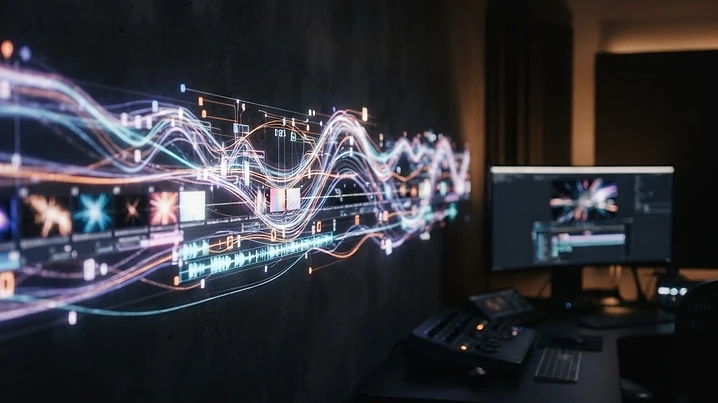
Produce high-quality assets in any language
Break out of your local market by accessing hundreds of voices that maintain natural cadence and emotional resonance across eighty different languages.
- Expand your reach with global language support
- Maintain consistent brand voice across all media
- Choose from a vast library of distinct speaker profiles
How it works, step by step
- 1
Step 1
Paste your script
Copy your written content directly into the editor without needing a microphone.
- 2
Step 2
Select your voice
Choose from hundreds of lifelike, professional voices that match your brand identity.
- 3
Step 3
Automate visual alignment
Let the platform select matching visuals and captions to support your narration.
- 4
Step 4
Refine and regenerate
Update specific lines instantly if you want to tweak the pacing or tone.
- 5
Step 5
Export and publish
Download your high-quality video and publish it across your channels immediately.
Your roadmap: what the first 30 days look like
- 1
Day 1
Initial Setup
Upload your first script and generate your initial audio draft in under two minutes.
- 2
Week 1
Workflow Integration
Replace your manual recording sessions for standard content clips and observe the immediate time savings.
- 3
Week 2
Scaling Output
Increase your content volume by using the time reclaimed from your previous recording schedule.
- 4
Month 1
Process Optimization
Establish a consistent, automated rhythm for all your professional voiceover and video requirements.
- 5
Month 3
Full Maturity
Benefit from a fully realized content library that has grown steadily without any manual studio sessions.
What You Do in the Next Ten Minutes
You have everything you need to start. Spend the next ten minutes logging in and uploading a single, short script that has been sitting in your draft folder for weeks. Watch how the narration generates, swap a few words to see the instant update, and compare that final video file to the last one you spent hours recording yourself. This is the moment where you either reset your production standard or concede that your content pipeline will remain stuck for the remainder of the year. The cost of remaining where you are is visible every time you look at a pile of unrecorded, high-value ideas. If you choose to act now, you will have your first piece of content finalized before the end of the hour, and you will have finally broken the cycle that has been costing you your evenings. Do not wait for a perfect moment to change your workflow; the perfect moment is when you realize your current process is unsustainable. Use the links provided to set up your account, test the interface, and push your first project live. You are five minutes away from the first content piece you have produced without the weight of a studio session holding you back, and you will quickly realize why you should have made this switch months ago.
Stop recording your own voiceovers today
Automate your production and reclaim your evening hours for high-impact work.
Get Fliki AI nowAffiliate disclosure: the links on this page are affiliate links. If you buy through them we may earn a commission at no extra cost to you. It never changes what we recommend.