Use Fliki AI to bypass the recording process entirely. By converting text to natural-sounding narration, you eliminate the need for microphones and audio editing. It is the fastest way to turn written scripts into professional video content while maintaining total control over every sentence, inflection, and pacing choice without ever speaking a word.
The silent cost of your own voice
It is Tuesday afternoon and you have a finished script for a product explainer sitting in your Google Doc. You know the content is solid, but you have been putting off recording it for three weeks. The prospect of clearing your desk, setting up the microphone, and listening to your own voice play back in a cold, sterile audio file is enough to make you close the tab. You are not lazy; you are just tired of the friction that comes between having something worth saying and the act of actually recording it.
You likely lose about eleven hours a month just managing the logistics of audio production. That is twelve full days a year spent fighting with software, deleting botched takes, and editing out background noise. You are not a voice actor, yet your current workflow demands you become one. You are effectively paying yourself to perform low-value, high-friction tasks that keep you from focusing on your actual business strategy.
This page is for the professional who is tired of the cupboard-recording ritual. We are going to look at how Fliki AI changes this dynamic. You will see how to bypass the booth, stop the cycle of retakes, and move from a static document to a finished video in a fraction of the time. If you are ready to stop hating the sound of your own voice and start shipping consistent, high-quality audio, this is your path forward.
Your Audio Production Selection Criteria
- Regenerate specific sentences without redoing the entire project
- Access a library of voices that sound human and authentic
- Control pacing and pauses for professional narrative flow
- Support for multiple languages to reach international audiences
- Direct integration of visuals and subtitles with the audio

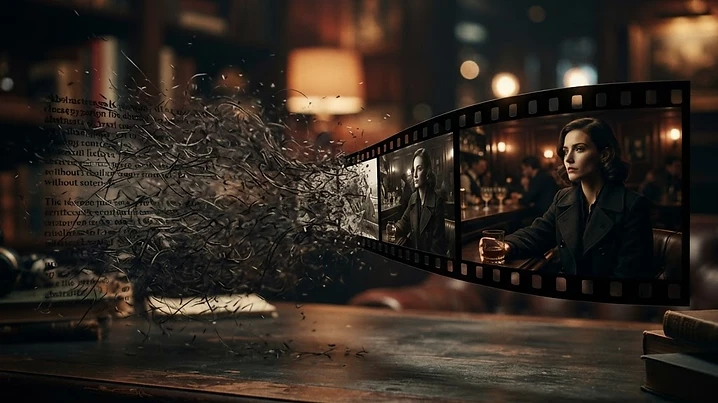
Stop recording and start shipping today.
Eliminate your production bottleneck in minutes.
See how it worksReplace the microphone with a faster workflow.
Your content is too valuable to die in a text file because you hate the recording process. Start building a consistent video library today.
- Eliminate your recording setup permanently
- Update your content in seconds, not hours
- Professional audio in any language you choose
What is the true cost of your recording bottleneck?
The true cost of your recording bottleneck is not the price of a microphone, but the complete cessation of content output. When you delay a video because you cannot face the recording process, you are effectively choosing to remain silent in a market that rewards consistency.
Every week you skip a video update is a week of lost visibility. If your goal is to build authority, every unrecorded script is an asset gathering dust. You are missing out on the compounding interest of content distribution. While you deliberate on your next recording window, your competitors are shipping training modules and product explainers that keep their brand in front of customers every single day.
There is also a hidden financial drain here. If you are outsourcing this to a freelancer to avoid the pain of recording, you are likely spending hundreds of dollars per video. You are paying for their studio time, their post-production, and their turn-around schedule. By removing the need for a booth, you regain control over your timeline and your budget, moving from a multi-day production cycle to a twenty-minute, self-managed workflow.
Why traditional recording fixes consistently fail you
The usual attempts to fix your recording workflow—buying better microphones or soundproofing your office—fail because they address the hardware, not the friction of the process. Adding gear just adds more steps to the setup, making it even less likely you will actually sit down to record.
Most professionals try to solve this by purchasing a high-end interface or a shock mount. This creates a psychological hurdle; you feel like you need a perfect, quiet environment before you can hit record. This mindset makes a simple thirty-second clip feel like a major film production, which naturally leads to procrastination. You do not need a better mic; you need a process that ignores the mic entirely.
Trying to hire an editor to fix your mistakes is another trap. You end up spending hours sending files back and forth, explaining where the pacing was off, and waiting for revisions. You are trading one time-sink for another. These solutions fail because they force you to remain a project manager of your own audio rather than just the author of your ideas. You need to detach the writing of your script from the physical act of performing it.
The numbers behind the problem
11 hrs
Average monthly hours lost to recording
0
Number of retakes required
$1,200
Monthly cost of external production
15 min
Time to produce a 5-minute video

Stop recording and start shipping today.
Eliminate your production bottleneck in minutes.
Watch the product demoHow to choose a system that removes the recording friction
A tool that truly solves your recording bottleneck must allow you to edit by text, not by wave-form. If you have to move back to a recording booth every time you change a single adjective in your script, you have not actually solved the problem; you have only masked it.
Your primary criteria for selection must be the modularity of the audio engine. Can you change a line and update the audio without rerendering the entire ten-minute video? If the tool forces a full export every time you find a typo, you are wasting time. You need a system that treats your video like a document, where the text drives the audio generation in real-time.
Secondly, the tool must support a variety of natural tones. You are not looking for a robotic delivery, but a professional, rhythmic voice that sounds like a colleague, not a news anchor from 1995. The ability to control pace and pauses is essential. If the AI talks at one flat speed, your audience will tune out. Choose a platform that gives you the granular control to adjust how a sentence is delivered without requiring a degree in sound engineering.
What the fix looks like in your actual workflow
The transition to an AI-driven workflow changes your day from one of manual labor to one of editorial refinement. Instead of sitting in a closet with a microphone, you spend your time ensuring your script is sharp, concise, and ready for its audience.
You start by pasting your text into the editor. You listen to the first draft, adjust the pacing on a specific paragraph to add emphasis, and swap out the voice if the tone is not quite right for the audience. The entire process takes minutes rather than hours. You are no longer fighting the equipment; you are refining the message.
By adopting this, you regain the ability to iterate. If you realize your product explainer needs an update for a new feature next month, you do not have to clear your schedule for a new recording session. You open the file, rewrite the sentence, and regenerate only that segment. This agility is what makes a professional content strategy possible. You move from being an amateur producer to a high-output communicator, focusing entirely on the quality of your words rather than the quality of your vocal takes.
Hundreds of voices, zero studio time
Stop worrying about your inflection or recording environment. Access a library of voices that sound like human experts, not robotic assistants.
- Natural pacing and pitch control
- Eighty plus languages supported
- Refine pronunciation with simple text edits
What you actually get, feature by feature
Text-to-Speech Engine
Instantly converts your scripts into high-quality, professional-sounding narration.
Granular Sentence Editing
Modify individual sentences without needing to regenerate the entire video file.
Global Language Library
Access hundreds of voices across 80+ languages to reach a wider audience.
Built-in Visual Assets
Save time by sourcing relevant stock visuals directly within the project editor.
Customizable Voice Pacing
Adjust the speed and flow of audio to match your specific narrative requirements.
Caption Integration
Automatically sync your narration with on-screen text to improve viewer retention.
Proof by scenario: what a week looks like when you stop recording
You will gain twelve hours of production time in your first week by replacing your recording setup with a text-based workflow. Instead of clearing your schedule for a Friday afternoon booth session that leaves you exhausted, you spend thirty minutes on Monday morning pasting scripts into Fliki AI and generating the audio track. The Tuesday afternoon rush to finish a client explanation video is no longer a race against your own voice fatigue. You simply tweak the text, hit generate, and export. By Thursday, you have shipped four modules that would have previously sat in your drafts folder for a month.
Your output shifts from episodic, stressed sprints to a sustainable, quiet rhythm. Where you once dreaded the microphone setup, you now look at your content backlog as a simple administrative task. Because you no longer need to book studio time or quiet rooms, your ability to create becomes tethered to your ability to type rather than your availability to perform. This is the difference between a stalled project and a shipped one.
Most importantly, you retain the ability to polish your work without starting over. If a technical term is mispronounced, you do not re-record the entire track. You adjust the phonetic spelling or swap the voice in a few clicks. This level of granular control ensures that your finished product sounds professional, accurate, and perfectly paced. You are no longer fighting the physical limitations of a voice that cracks after the fifth take.
Addressing the three real reasons for hesitation
You are likely worried that the audio will sound robotic, that the setup will be too complex, or that you are paying for a tool you will not use. Let us be clear: the era of monotone, unnatural synthetic voices ended years ago. Modern neural voices track punctuation and emphasis with enough precision that your average client will not know the difference between a studio recording and your Fliki-generated track unless you tell them. You can test this in ten minutes with a single script to verify the quality yourself.
Regarding the learning curve, this is not complex video editing software that requires a certification to navigate. It is a text-to-video environment designed for professionals who need to ship output, not spend hours mastering a timeline. If you can edit a document in a word processor, you have already mastered the core interface of this tool. You are not learning to be a sound engineer; you are learning to be a content producer.
Finally, the cost is trivial when measured against the value of your time. If you value your time at fifty dollars an hour, you cover the annual cost of this tool by saving less than two hours of recording labor. If you are currently wasting ten hours a month on audio production, you are paying for this tool many times over in lost capacity. Hesitation is rarely about the price of the software; it is about the fear that it will not solve the deeper problem. You have already identified that the bottleneck is the recording itself, and this is the direct fix.

Stop recording and start shipping today.
Eliminate your production bottleneck in minutes.
Create your first projectThe hidden cost of staying in the status quo for six more months
If you do not change your workflow, you will sacrifice roughly three hundred hours of productive time over the next six months to the same recording bottlenecks. That is time you could have spent on strategy, client growth, or deep work. Every week you continue to record manually is a week you lose to the setup, the retakes, the fatigue, and the eventual abandonment of projects that were worth sharing. You are paying for your hesitation in pure, unrecoverable hours.
Beyond the raw hours, consider the reputation cost of your silence. Your expertise is stuck in your head or your rough drafts because the barrier to production is too high. Six months of manual recording leads to a thin content presence, where competitors who have embraced automated narration are already ahead. They are shipping content while you are still deciding which microphone gives you the least distorted sound.
This is not a decision about a piece of software; it is a decision about your future output speed. Sticking to the status quo ensures that your content output remains limited by your physical energy and your emotional distaste for your own voice. You will continue to build a library of unfinished drafts while the professionals who use modern tools occupy the space you should have claimed months ago.
The decision to move forward now
Your choice is between continuing a broken manual workflow or adopting a system that treats content creation as a standard business task. You know the cost of the microphone and the cupboard; you know the cost of the hours lost to frustration. The only variable remaining is whether you prioritize your output over your adherence to a process that clearly does not work for you.
When you start today, your first goal is simple: take one of your current, unrecorded projects and push it through the system. Do not plan for the next year of content; just finish this one task. By the time you see the rendered video, the hesitation will be gone. You will see that the barrier you have been facing was entirely optional and that you have held the key to removing it all along.
Choose to end the cycle of recording fatigue. Start the process of offloading your voice work to a system that works faster and more reliably than your own lungs. The tools are ready, the workflow is proven, and your backlog of unshared ideas is waiting for you to move.
What this actually looks like
Straight talk: the pros and the cons
What you get
- No microphone or voice booth required
- Instant edits at the sentence level
- Diverse library of human-like voices
- Built-in visual asset library included
- Rapid turnaround for high-volume content
Worth knowing
- Requires high-quality source scripts for best results
- Not intended for emotional or dramatic acting
- Advanced lip-sync features are still limited
From a script to a published file
Your workflow becomes linear and predictable. If you can type it, you can narrate and publish it without ever touching a soundboard.
- Generate audio from any text source
- Instant updates for script revisions
- Visuals and captions included automatically
How it works, step by step
- 1
Step 1
Paste your draft
Copy your written script directly into the text editor.
- 2
Step 2
Select the voice
Browse the library to find the perfect professional tone.
- 3
Step 3
Refine the pacing
Add pauses and adjust tone for specific, critical sentences.
- 4
Step 4
Automate the visuals
Use built-in media to match your script highlights.
- 5
Step 5
Publish and iterate
Export the final file or update as your needs change.
Your roadmap: what the first 30 days look like
- 1
Day 1
Clear the backlog
Convert your three oldest, unrecorded scripts into finished video assets in under an hour.
- 2
Week 1
Establish the rhythm
Build a recurring schedule where your weekly content is drafted and rendered on Monday morning.
- 3
Week 2
Refine the polish
Experiment with different voice styles to match your brand tone for specific video categories.
- 4
Month 1
Scale the volume
Double your content output without adding a single hour to your total work week.
- 5
Month 3
Full automation
Integrate your script-to-video workflow into your daily operations to ensure constant output.
Your next ten minutes define your productivity
The path forward requires only a few minutes of setup. In the next ten minutes, you can log in, paste the draft of your next project, and watch as it transforms from a static document into a professional video. This is the moment where your content pipeline finally stops being a source of stress and starts being an engine for your professional growth. Do not let another week of avoidable recording sessions drain your energy. You have the tools, you have the scripts, and you have the need to scale your output. Click the button to start your first project, and see exactly how much faster you can operate once the microphone is out of the equation. If you wait, you are only choosing to spend another week doing things the hard way. The technology to replace your recording frustration is already here, and it is waiting for your next script. Claim back those wasted hours and start producing content at the pace you actually want to maintain.
Stop recording and start shipping today.
Eliminate your production bottleneck in minutes.
Get Fliki AI nowAffiliate disclosure: the links on this page are affiliate links. If you buy through them we may earn a commission at no extra cost to you. It never changes what we recommend.