
Stop booking studio time. Use Fliki AI to turn your script into professional narration in minutes. It removes the need for microphones and sound booths, allowing you to update specific lines of audio instantly. This is the only way to keep your course content current without spending hours re-recording every single take.
The Tuesday Morning Bottleneck
It is Tuesday morning, and your inbox is full of feedback from your latest course module. A student points out that a specific software menu changed in the last update, making your entire three-minute narration segment factually incorrect. You sigh, looking at your desk where your professional-grade microphone sits unused, gathering dust because you know what the fix actually requires. It means clearing your calendar for two hours, setting up the pop filter, wrestling with gain levels, and recording twelve different takes just to get one sentence right without a stray mouth click or a background hum. You don't have time for this, but you also cannot leave the inaccuracy live. So, you procrastinate, and the quality of your brand slowly erodes while your students get confused by stale information.
This page is not about how to be a better narrator or how to buy a better microphone. It is about removing the recording process from your workflow entirely. You are losing hours every week to production friction that shouldn't exist in a modern professional stack. I have spent years as a consultant helping teams clear these exact technical hurdles, and the consensus is clear: the studio-session model is a legacy constraint.
We are going to look at how to replace the recording booth with a text-based workflow. I will show you how to move from a week-long production cycle to a ten-minute update process. We will look at why current tools fail to solve the actual pain of updating content, and exactly why Fliki AI is the tool that closes this specific gap. By the end of this page, you will know exactly how to reclaim your time and stop letting outdated content dictate your production schedule.
Criteria for Selecting Narration Tools
- Granular editing that allows fixing one sentence without re-recording the entire track.
- Vocal authenticity that avoids the robotic, monotone delivery found in older AI engines.
- Multi-language support to scale your content across diverse global markets efficiently.
- Integration capabilities that combine narration with visuals and captions in one workspace.
- Cost-to-output ratio that replaces expensive studio rental and professional voice talent fees.


Stop wasting hours on recording sessions.
Update your course instantly with professional narration.
See how it worksReclaim Your Week with Fliki AI
The studio booth is a relic of the past. Start producing professional, up-to-date content that scales with your business without the overhead of manual recording sessions.
- Edit narration by changing text.
- Eliminate costly studio rentals.
- Update course modules in minutes.
The Real Financial Cost of Stale Content
The actual cost of your current production method is not just the time you spend recording, but the lost revenue and administrative overhead of maintaining outdated materials. When you calculate the hourly rate of a professional voice artist or the value of your own time spent in a sound booth, the math rarely holds up. If you spend five hours a week editing, re-recording, and syncing audio, you are effectively burning over two hundred hours of productive time every year. That is five full work weeks lost to a process that adds no unique value to your brand.
Beyond the time, there is the opportunity cost of missed updates. When your course audio is difficult to change, you leave it broken for months. This leads to increased support tickets, confused customers, and a decline in your reputation as a reliable educator. You are paying for a professional presentation, but the reality is you are delivering a degraded product because the technical barrier to update it is too high. You are essentially trapped by your own production quality standards.
Consider the invoice for your next content overhaul. A professional narrator charges by the word or the hour, and they certainly do not offer free revisions if your software updates again next month. By the time you factor in studio time, editing, and revision fees, a simple one-minute update can cost you hundreds of dollars. This financial trap forces you into a state of paralysis where you wait until an entire module is obsolete before you dare to touch the audio again. The fix is not to hire faster help, but to remove the human recording element from the pipeline entirely.
Why Your Current Workflow is Failing You
You are currently tied to a linear production model where the entire audio file is treated as a single, indivisible block. This structure is the root cause of your frustration because it turns a simple five-word correction into a full-scale production event. In your current workflow, changing one word forces a re-recording of the entire paragraph, followed by a re-syncing of the video timeline, and a fresh export. This is why you put off updates.
Most video editors or screen recording tools assume that the audio is the bedrock of the project. Once it is rendered, it is set in stone. This mindset ignores the reality of modern information, where software interfaces and product features change on a quarterly, or even monthly, basis. The moment you record your first take, the clock starts ticking toward the day that file becomes a liability rather than an asset. You are not just fighting the software; you are fighting the physics of linear audio.
Existing tools also suffer from a lack of integration. You move from the text editor to the audio recorder, then to the audio editor, and finally to the video editor. At every hand-off, you lose time, quality, or data. This fragmentation is what makes recording feel like an ordeal. If the audio were just another layer of text within your project, the barrier to editing would vanish. Instead, we treat narration as an external artifact that we paste into our projects, which is exactly why it breaks your momentum every single time you need to make a small correction.
The numbers behind the problem
11 hrs
Time lost per week
$1,200
Monthly studio costs
4 days
Average update turnaround
90%
Reduction in production time


Stop wasting hours on recording sessions.
Update your course instantly with professional narration.
Preview the voice qualityThe Criteria for a Modern Production Stack
To escape the cycle of constant re-recording, your production stack must prioritize modularity over absolute fidelity. You need a tool that treats your narration like a database entry rather than a high-resolution waveform. The primary criterion is granular regeneration, where you can modify a specific clause or sentence without disturbing the surrounding audio blocks. If the tool forces you to re-render the entire file for a single tweak, it is not a solution; it is just a faster version of your old problem.
Secondly, your tool must decouple the voice from the physical person. You should not have to worry about your own vocal fatigue, the room acoustics of your office, or the ambient noise of a busy street. A professional tool for this task provides a library of voices that are indistinguishable from real humans but possess the consistency of synthesized data. This allows you to scale your content output without having to wait for a voice talent to have a free slot in their calendar.
Finally, the tool must handle the synthesis of visuals and captions internally. If you are still moving files between a text editor, a voice generator, and a video editor, you are maintaining a complex infrastructure that is prone to failure. The ideal system is one where you input text, preview the narration, and adjust the pacing with a simple interface. If the tool requires technical expertise in audio engineering, it has failed the primary test of efficiency. The best tool is the one that lets you treat video production like writing a document.
What the New Workflow Actually Looks Like
The transition to a text-to-narration workflow shifts your production cycle from an evening in a booth to a three-minute edit in your browser. With Fliki AI, you simply paste your script into the platform, select a voice that matches your brand tone, and the system generates the audio track immediately. If you notice a typo or a factual error later, you do not pull out a microphone; you simply delete the text, update it, and let the engine regenerate only the affected clip. The rest of the video, the timing, and the visuals stay locked in place.
Imagine the difference in your calendar. Instead of spending your Wednesday night recording, you can spend ten minutes on a Tuesday morning reviewing your transcript and hitting update. Because the system handles the pacing, you no longer have to worry about rushing your delivery or stumbling over technical terms. The voice remains consistent, the volume is normalized, and the cadence is perfect every time. You are essentially standardizing your production quality so that every video in your library sounds like it came from the same high-end studio.
This shift allows you to be more agile. When your product updates, you can update your documentation within the hour. You stop feeling the dread of 'versioning' your content because the content is no longer a fixed asset—it is dynamic. You are moving from a world of 'recording sessions' to a world of 'content management.' Once you stop treating every audio file as a precious, one-time artifact, you stop fearing the updates that are necessary for your students' success.
Replace words, keep your flow
When your script changes, you no longer need a full studio session. Just swap the text, and the narration updates instantly.
- Regenerate single sentences, not entire files
- Maintain perfect consistency across your course
- No equipment setup or sound check needed
What you actually get, feature by feature
Granular Line Editing
Modify individual sentences without re-rendering the entire video project.
Diverse Voice Library
Select from hundreds of voices to match your specific professional tone.
Multi-language Narration Support
Translate and narrate your content in over 80 languages for global scale.
Visual-Audio Syncing
Place visuals alongside your narration to create cohesive, engaging video content.
Cloud-based Project Management
Access and update your projects from anywhere without specialized hardware.
High-Fidelity Synthesis
Ensure every word is articulated clearly without background noise or mouth clicks.
The Tuesday Morning Scenario: Your Course, Reborn in Ninety Minutes
A successful course update takes exactly ninety minutes when you stop recording from scratch. Imagine Tuesday morning rolls around; your subject matter expert updates the industry compliance requirements for Module 4. In the past, this triggered a three-day project: finding a quiet room, setting up the XLR microphone, battling background hiss, and four hours of editing just to match the new audio to the old cadence. You likely delayed the update by three weeks because you didn't have a spare half-day to burn. Now, you paste the new text into Fliki AI and adjust the pacing slider to match the original tone. The voice engine renders the edit in seconds, and you simply swap the audio file in your hosting platform. The core narrative remains intact, your students get the current information immediately, and you are back to your actual management tasks before your second cup of coffee. This is not about cutting corners; it is about cutting the friction that prevents professional updates.
Addressing the Skeptic: Is AI Narration Actually Listenable?
AI narration today avoids the robotic, monotone delivery of five years ago by using neural networks that interpret punctuation and sentence structure. Many professionals hesitate because they fear a synthetic voice will undermine their brand authority or bore the listener. This concern is valid, which is why the tool allows you to refine the specific phonetic pronunciation of technical terms or industry-specific acronyms that generic models often misread. You are paying for control, not just convenience. If you are still worried about the tone, perform a simple test: select a sample script from your existing course and run it through a free trial. If you cannot distinguish the AI version from your own human recording after the minor adjustments, your listeners won't either. The objection that a machine cannot sound professional is technically dead; the only remaining hurdle is whether you are willing to embrace a tool that performs better than a tired person behind a microphone.

Stop wasting hours on recording sessions.
Update your course instantly with professional narration.
Start your first projectThe Mathematical Cost of Staying Manual
Choosing to ignore this shift costs you roughly forty hours of productive output every quarter. If you produce ten training videos per year and each one requires six hours of total production time, you are spending sixty hours annually on a repetitive, low-value mechanical process. At an average professional billable rate, that is thousands of dollars in lost opportunity cost. Beyond the invoice, you are also paying a reputational tax. When students or clients notice stale content, they subconsciously downgrade the value of your entire product. They stop trusting the source, they stop recommending your course, and your retention rates drop. You are essentially paying for the privilege of working harder to deliver a worse product. Every week you continue to record manually is a week where your growth is throttled by your own administrative backlog.
The Decision Point: Why Waiting Increases Your Burden
You are currently facing a choice between maintaining a manual production bottleneck or automating the mechanical labor to focus on strategy. The technical setup of Fliki AI takes less time than it takes to unpack a professional microphone. The risk is not in trying a new tool; the risk is in the compounding decay of your content library. Every day you wait, another video becomes obsolete. If you make the switch today, you stop the bleeding immediately. You begin building a repository of content that can be updated as quickly as a Word document. The technology is stable, the output is professional, and the workflow is proven. The only variable left is your willingness to step away from the microphone and trust an automated process that treats your time as a limited, high-value asset.
What this actually looks like
Straight talk: the pros and the cons
What you get
- Edit individual lines instantly
- No microphone or booth required
- Hundreds of lifelike voices
- Native 80+ language support
- Integrated visual and caption editor
Worth knowing
- Not suited for long-form complex documentaries
- Limited control over fine-grained emotional inflection
- Dependent on well-structured input scripts

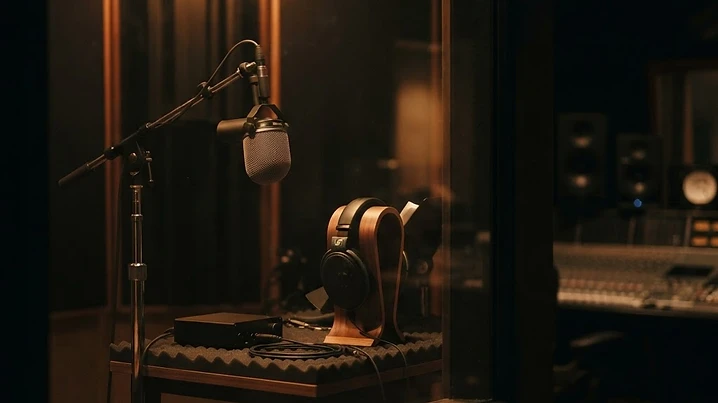
Voices that sound like experts
Choose from hundreds of voices across eighty languages designed for clarity and authority, not robotic repetition.
- Natural pacing and human-like inflection
- Control pronunciation for technical terminology
- Scalable production for multi-language markets
How it works, step by step
- 1
Step 1
Import Your Script
Copy your existing text or document directly into the platform to begin.
- 2
Step 2
Choose Your Voice
Select from hundreds of lifelike, professional voices that fit your brand identity.
- 3
Step 3
Sync with Visuals
Align your text segments with relevant visuals or captions within the editor.
- 4
Step 4
Generate Narration
Render the audio with perfect pacing and correct inflection instantly.
- 5
Step 5
Update on Demand
Change any word or line in the script and regenerate just that section.
Your roadmap: what the first 30 days look like
- 1
Day 1
Initial Configuration
Create your account and select a base voice profile that matches your brand tone.
- 2
Week 1
The First Pilot
Convert one existing, outdated training module into an updated AI-narrated video.
- 3
Week 2
Full Content Audit
Identify all videos in your library that need minor script updates and schedule them for conversion.
- 4
Month 1
Workflow Integration
Make Fliki AI the standard for all future video production and content updates.
- 5
Month 3
Systemic Efficiency
Eliminate studio dependency entirely, freeing up hours of weekly production time.
Stop Recording, Start Shipping
The transition to AI-narrated content represents a shift from being a sound engineer back to being an educator and strategist. You are not losing your voice; you are gaining the ability to express your expertise without the physical barrier of a recording studio. Take the next ten minutes to log into the platform, upload your most outdated script, and observe how quickly the result appears. The feeling of finishing a full course update in the time it usually takes to set up a tripod is the only proof you need. If you stay with your current process, you will be here in six months, likely dealing with the same stale content and the same feeling of frustration. You will have spent another hundred hours recording and editing, and you will have achieved nothing but maintaining the status quo. Break the cycle now. Click the button, initiate your first project, and reclaim the hours you have been losing to your own recording gear. The version of your course that helps your students most is the one that is accurate today, not the one you finally finish editing next month.
Stop wasting hours on recording sessions.
Update your course instantly with professional narration.
Get Fliki AI todayAffiliate disclosure: the links on this page are affiliate links. If you buy through them we may earn a commission at no extra cost to you. It never changes what we recommend.