Your current voiceovers sound robotic because you are using legacy speech synthesis that lacks nuance and natural pacing. Fliki AI solves this by using current-generation neural engines that handle prosody and emotion. Stop wasting hours in a recording booth and start generating professional audio from your text in minutes.
The Tuesday Afternoon Reality Check
It is Tuesday afternoon. You have a script finished that could help your audience or sell your service. But it is stuck in a Google Doc because to publish it, you would have to spend three hours in a closet with a USB microphone, fighting your own self-consciousness while your neighbor decides to mow their lawn. You know the drill: twenty takes to get a clean read, another two hours cutting out the clicks and breaths, and then you realize you mispronounced a key term in paragraph three. The whole process is a tax on your creative momentum. By the time you are done, the excitement you felt when writing the draft has long since evaporated, and the output is often a stiff, unnatural read that you would rather not listen to twice.
You have likely tried the cheap voiceover tools floating around the internet. They promised a quick fix but delivered a sound that immediately signals to your listener that you cut corners. It is the flat, buzzing tone of 2019 AI that makes your professional work sound like a customer service bot. You feel the gap between the quality you want to project and the quality the current tools actually produce.
This page is for the professional who is tired of the compromise. I am going to show you why your current narration fails and exactly how to move to a production workflow that is as fast as typing but as professional as a voice actor. We are not just fixing your audio; we are fixing the bottleneck that prevents you from shipping your best work to your audience every single week.
Voiceover Tool Evaluation Matrix
- Check for neural-engine prosody that mimics human breathing patterns.
- Verify that individual sentences can be regenerated without full re-renders.
- Ensure the platform supports multi-language nuance for global accessibility.
- Look for granular control over pitch, speed, and emphasis settings.
- Confirm direct integration of visual assets alongside audio tracks.
- Test if the tool preserves voice consistency across long-form scripts.

Stop Choosing Between Quality and Velocity
You have the ideas. You have the audience. Stop letting your recording equipment hold you back from publishing the work you know your business needs.
- Get professional results in minutes, not hours.
- Ship consistent content without the studio burnout.
- Fix your audio quality and scale your reach today.
The Real Cost of Subpar Audio
The actual cost of relying on low-end AI narration is not just the five dollars you might pay for a cheap service; it is the erosion of your brand authority and the loss of your audience's attention. When a listener hears a flat, metallic, robotic voice, they subconsciously stop treating you as a subject matter expert and start viewing you as a spammer. Every minute of robotic audio is a minute that discourages a potential lead from taking you seriously, effectively lowering the conversion rate of every piece of content you produce.
Beyond the reputation hit, there is the raw time-cost of your current production method. If you are recording your own audio, you are likely losing at least six to ten hours every week on set-up, takes, and post-production cleaning. At a standard professional billing rate, that is easily costing you between four hundred and eight hundred dollars in lost opportunity time every single week. You are essentially paying a massive premium for the privilege of being tired and creating content that sounds unpolished.
When you stick with these legacy methods, you are not just missing out on efficiency; you are failing to scale your influence. You have ideas that deserve to be heard, but because the hurdle to producing them is set too high, they remain trapped in text files. You are losing the compounding effect of consistent, high-quality output that would otherwise keep your brand at the front of your customers' minds. The status quo is an invisible ceiling on your business growth.
Why Your Current Tools Fail the Test
Most voiceover tools fail because they are built to render a flat string of characters rather than interpret the intent behind the words. They rely on outdated speech synthesis models that lack the ability to handle punctuation as a guide for breathing or emphasis. This is why you hear that unnatural, monotonous drone; the software is reading the alphabet, not the context, and your audience can feel the lack of humanity in every sentence.
Another failure point in legacy tools is the inflexibility of their editing process. When you use a tool that requires you to re-render the entire file every time you spot a mistake or want to change a word, you are locked into a loop of frustration. This discourages you from refining your content until it is perfect. You start settling for 'good enough' because the cost of fixing a minor error is too high, and that compromise inevitably bleeds into the quality of your finished project.
Finally, these tools often ignore the visual component of your message. By separating audio from video creation, you create a fragmented workflow that requires syncing third-party assets and hoping the timing feels right. True professional production requires the ability to see the audio and the visual environment as a single, cohesive unit. When your narration tool doesn't account for the pacing of your clips, you end up with an awkward, disjointed experience that forces your viewer to tune out.
The numbers behind the problem
12 hrs
Average time saved per week
80+
Supported languages
90%
Reduction in editing effort
$1,400
Est. monthly cost of professional studio time

The Criteria for Choosing a Professional Tool
To choose the right tool for your professional workflow, you must prioritize neural-driven synthesis that accounts for prosody over raw processing speed. You need a platform that understands where a human would pause, where they would emphasize a keyword, and how they would naturally cadence a complex sentence. Without this level of sophistication, you will always be fighting the 'uncanny valley' of robotic speech.
You also need to look for a non-destructive edit workflow. The ability to modify one specific sentence and regenerate only that segment without affecting the surrounding audio is the single most important factor in reducing your post-production time. If a tool requires a total re-render for a single word change, it will eventually become a major pain point that halts your creative flow and kills your weekly cadence.
Lastly, ensure the platform treats audio and visual synchronization as a priority. You want a tool that allows you to drop in your script, automatically align it with relevant imagery or captions, and handle the pacing in a single interface. A professional tool should make the end-to-end production of a video look more like a document edit than a technical rendering project. If you have to jump between five different apps to get a video to look and sound right, you are not using a tool; you are performing an integration project.
The Reality of a Modern Production Workflow
A high-efficiency production workflow changes the experience of content creation from a dreaded evening task into a ten-minute editing exercise. With a platform like Fliki AI, the transition happens because you move from acting as a recordist to acting as an editor. You paste your text, you preview the generated voice, you make targeted adjustments, and you export—all without ever needing to touch a microphone or set up a professional audio environment.
Imagine finishing your next script and having it ready to publish in the time it takes to brew a cup of coffee. You eliminate the frustration of failed takes and the mental fatigue of trying to sound 'just right' in front of a mic. You gain the ability to maintain a high-frequency, high-quality output schedule because the barrier to entry for each piece of content has been lowered from hours to mere minutes. This is how you build a library of content that actually works for you 24/7.
This shift allows you to focus on the value of your message rather than the technical overhead of the medium. When you take the friction out of narration, you become more willing to experiment with new formats, update your course materials, or produce training clips for your team. You aren't just saving time; you are unlocking the ability to speak to your audience through every available channel without burning out in the process.
From a blank page to a finished asset in minutes
Stop sacrificing your evenings to recording sessions that never sound quite right. Move your workflow to a model where you edit text, not audio waves.
- Instant generation from text input
- Fine-tune individual sentences without re-recording
- Scale your production by 3x immediately
What you actually get, feature by feature
Neural Voice Synthesis
Produces lifelike, emotionally resonant audio that captures your audience's attention instantly.
Sentence-Level Editing
Allows you to correct mistakes without needing to re-record or re-render entire video files.
Global Language Support
Lets you reach new markets by generating high-quality narration in over eighty different languages.
Integrated Visual Library
Provides immediate access to stock assets that align with your script's narrative and pacing.
Automated Caption Generation
Ensures your content is accessible and engaging by creating perfectly synced, readable text overlays.
Granular Pacing Controls
Gives you the power to dictate exactly how each sentence is spoken for maximum impact.
The Seven-Day Shift from Stagnation to Shipping
You will move from content that gathers dust to a library of published assets in exactly one week by moving your workflow from manual recording to iterative generation. The shift works because you stop treating audio as a high-stakes performance that demands a perfect take and start treating it as a modular component you can edit at will. When you treat your scripts as data, the bottleneck disappears.
Imagine Tuesday morning. You have a four-page product brief that has been sitting in your drafts folder for three weeks. Instead of clearing your schedule to warm up your voice and fight the hum of your computer fan, you paste the text into Fliki. Within ten minutes, you have a draft. You realize the tone in the second paragraph is a bit too clinical, so you rewrite that one sentence and click generate. The change applies instantly, preserving the pacing of the rest of the clip. You save two hours of recording and four hours of editing. By Friday, you have pushed out three LinkedIn videos and an internal training module that would have normally cost you an entire weekend of work.
This is not just about speed; it is about the quality of the finished output. When you are no longer exhausted by the mechanical process of recording, you can focus on the nuance of your script. You catch the clunky phrasing that you would have otherwise ignored just to finish the session. Your audience notices the difference because you finally have the bandwidth to refine your message. You are not just making more content; you are making content that actually serves your professional reputation.
Killing the Three Hidden Objections
Professional hesitation toward AI audio usually boils down to three fears: that it sounds inhuman, that it costs too much to replace a system you already own, or that the learning curve will be too steep. The reality is that current neural synthesis has bypassed the robotic phase, the subscription is priced as a rounding error compared to professional studio time, and the interface is as simple as a word processor. You are not buying a new complexity; you are buying the removal of your current one.
First, consider the quality. Modern neural engines handle prosody and rhythm in a way that makes the listener stop questioning if it is human and start listening to the information. If you still worry about the sound, the ability to regenerate individual lines allows you to tweak the pacing until it hits exactly right. You are in control, not the software. Second, address the price. If you value your time at a reasonable hourly rate, the cost of the subscription pays for itself after you save your first two hours of work. Spending a few dollars a month to reclaim entire days of your schedule is the clearest return on investment you will make this year.
Finally, ignore the fear of a steep learning curve. If you can copy and paste text into an email, you have already mastered the interface. There is no software to install and no hardware to configure. You are not building a technical pipeline; you are just changing the input method for your output. The objection that you do not have time to learn a new tool is usually a projection of fear regarding the transition, but the transition here is shorter than the time it takes to set up a professional microphone stand.

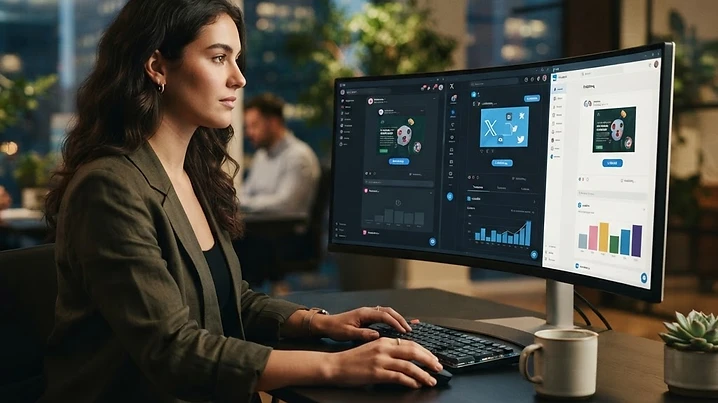
The Cumulative Cost of Sitting Still
Staying with your current manual recording workflow for another six months will cost you approximately two hundred hours and the opportunity cost of dozens of unpublished projects. Every month you delay is another month where your ideas remain trapped in text files, invisible to your clients and colleagues. The price of doing nothing is not just the lost time; it is the erosion of your authority in your field because you simply cannot publish fast enough to keep up with the conversation.
If you produce one piece of content every two weeks, you are operating at a snail's pace compared to what your peers are doing with modern tools. Over six months, that is twelve pieces of content. With Fliki, you could easily triple that to thirty-six. Think about the lead generation or the internal influence you miss out on with those twenty-four missing assets. You are currently paying a premium for the illusion of control that manual recording provides. You think you are protecting your quality, but you are actually just throttling your output.
Six months from now, you will either be looking back at a massive library of audio and video that you have built, or you will be in the exact same spot, complaining about how you do not have enough time to record. The irony of the professional world is that we often cling to the tools that keep us busy because the hard work feels productive. But being busy with a microphone is not the same as being effective with your audience. The cost of inertia is your own professional stagnation.
The Choice You Face Today
The decision before you is between continuing to operate as a hobbyist recorder or moving to a production-grade workflow. You know that your current process is the primary reason your content calendar is empty, yet you have hesitated because you believe the solution must be complicated. The tool is ready, the workflow is proven, and your audience is waiting for the value that is currently locked inside your drafts folder.
Choosing to start today means you stop spending your Tuesday evenings in a quiet corner of your house trying to get a clean take. It means you stop dreading the edit. You decide to treat your time as the most valuable asset you have, which it is. When you start, you will see that the barrier was never your lack of skill or lack of ideas; it was a mismatch between the medium you were trying to use and the speed at which you need to work.
Take the next ten minutes to sign up and drop one of your existing, unrecorded scripts into the editor. You will see the result in moments. You do not need a plan for the whole year; you just need to see that the audio is clean, the pacing is right, and the time you just saved is yours to keep. The cost of waiting is another week of silence, so decide to break that cycle now. Your audience has been waiting for your voice, and you finally have a way to give it to them without the headache of the studio.
What this actually looks like
Straight talk: the pros and the cons
What you get
- Neural voices that mimic natural human pacing
- Sentence-level regeneration saves massive edit time
- Broad support for 80+ global languages
- Built-in visual asset library for quick video creation
- No external microphone or recording studio needed
Worth knowing
- Learning curve for mastering advanced emphasis controls
- Requires stable internet for high-quality audio rendering
- Limited custom voice cloning options for entry-tier plans

Neural voices that listeners trust
Your audience will not hear a robotic engine; they will hear a clear, well-paced explanation. Deliver your ideas with the authority they deserve.
- Natural prosody and emotion settings
- Support for 80+ languages and regional accents
- Consistent delivery that matches your brand
How it works, step by step
- 1
Step 1
Paste your draft
Enter your script into the platform and select a voice profile that matches your brand tone.
- 2
Step 2
Automate narration
The neural engine generates natural, professional-grade audio instantly from your text.
- 3
Step 3
Adjust and tweak
Fine-tune specific sentences or word emphasis without needing to regenerate the whole video.
- 4
Step 4
Sync with visuals
Select from the built-in library to add relevant footage and captions aligned to your audio.
- 5
Step 5
Export and publish
Finalize your video file and push it to your audience, all within a few minutes.
Your roadmap: what the first 30 days look like
- 1
Day 1
Clear the Backlog
Upload your most important pending script and generate your first professional-grade audio file in under ten minutes.
- 2
Week 1
Establish the Workflow
Integrate Fliki into your standard content process so every new document moves directly from draft to finalized asset.
- 3
Week 2
Optimize for Engagement
Experiment with different voice profiles to match the specific audience and intent of your varied content types.
- 4
Month 1
Measure Your Gains
Calculate the hours saved by comparing your old recording times to your new, accelerated production cycles.
- 5
Month 3
Scale Your Authority
Review the significant increase in your total published assets and your audience reach now that your output is no longer bottlenecked.
Stop Waiting for the Perfect Studio Moment
The perfectionist trap is the most expensive habit in your professional life because it convinces you that if you cannot record like a radio host, you should not record at all. That is a lie that keeps your best ideas hidden. You have been waiting for a quiet room and a clear throat to start shipping your work, but that moment is a myth. Professional consistency does not come from waiting for the right conditions; it comes from using the right tools to remove the obstacles that stand in your way.
You have two choices today. You can close this page and go back to your current process, knowing full well that your next recording session will be just as frustrating and time-consuming as the last. You will continue to hoard your drafts and wonder why your influence is not growing. Or, you can sign up for Fliki now, turn those drafts into high-quality audio, and spend your time on what you actually do best: thinking, solving, and leading.
The setup takes seconds, and the first result will prove everything I have said here. You have already invested time in writing your content; do not let it die on the page for lack of a simple way to speak it. The cost of doing nothing is absolute, while the cost of starting is minimal. You have the scripts. You have the professional standard you need to hit. Now, you have the tool to bridge the gap. Click the button, move your work out of the text editor, and start your first project while the thought is still fresh. You will never go back to a microphone.
Affiliate disclosure: the links on this page are affiliate links. If you buy through them we may earn a commission at no extra cost to you. It never changes what we recommend.