
Use Fliki AI to convert your text into high-quality narration. It avoids the robotic, monotone delivery of older tools by using modern, inflected AI voices that sound like a real person. You get professional audio and synchronized video assets instantly, allowing you to ship content without ever touching a microphone.
The silent cost of the DIY recording booth
It is Tuesday night, and you are sitting in a walk-in closet buried under winter coats because they provide the best sound dampening. You have a script for a three-minute explainer video that you have been trying to finish for three days. You have recorded the same opening paragraph fourteen times, and every single take sounds like you are reading a tax document to a brick wall. Your throat is dry, the neighbor's dog is barking, and you know that even if you finish this, you still have to spend the weekend syncing it to video.
This is not a creative problem; it is a friction problem. You have a message that needs to reach your audience, but the sheer effort required to get that audio from your brain to a digital file is keeping you from shipping. Every hour you spend fussing over a microphone is an hour you are not spending on product strategy or sales. You are paying for your perfectionism with your most limited resource: time.
This page is not about magic or replacing human creativity. It is about removing the technical barrier that kills most video projects before they start. We are going to look at why your current struggle to sound natural is a structural issue, not a personal one, and how you can switch to a professional, high-fidelity narration process that turns text into ready-to-publish video in minutes.
Criteria For Choosing Video Narration
- Voice naturalness and emotional inflection capabilities
- Ease of editing for specific sentences only
- Availability of diverse regional accents and languages
- Integration of stock media with voice timing
- Cost efficiency compared to hiring human narrators


Stop recording, start shipping.
You are ten minutes away from your first professional AI narration.
Learn more about the toolProfessional audio is now a click away
Your content deserves to be heard, not hidden in a draft folder. Fliki AI gives you the consistency you need to scale your reach without the technical headache of a home studio.
- Generate studio-grade audio in seconds
- Update your content without re-recording
- Save hundreds of hours every year
The hidden price of your current recording process
The actual cost of recording your own narration is rarely about the microphone; it is about the days of work you lose to re-takes and editing. When you account for the setup, the frustration of misspoken words, and the post-production scrubbing of background hum, the true cost of a single professional-sounding video often exceeds eight hours of labor.
If you value your time at even fifty dollars an hour, that three-minute video is costing you four hundred dollars in lost opportunity before you have even paid for a single software tool. You are effectively paying a premium to be your own voice actor, despite the fact that your audience is likely more interested in the value of your information than your specific tone of voice. When you get stuck in the recording loop, you are not just missing a deadline; you are creating a backlog of content that stays in your drafts folder forever.
Most professionals try to fix this by buying expensive hardware, thinking a better microphone will solve the monotony of their delivery. But the hardware is not the problem. The problem is the process itself. As long as you are dependent on your own physical presence in a quiet room, you will always be limited by your energy levels and the amount of spare time you have on your calendar.
Why traditional text-to-speech tools keep failing you
Most automated voice tools sound robotic because they fail to account for rhythm, breath, and the way humans actually pause to emphasize a point. They read words at a flat, mechanical pace that signals to the human brain almost instantly that the content is low-effort, leading your audience to tune out within the first ten seconds.
This is the 2019 expectation of AI: a monotonous, clipped voice that makes your professional brand look cheap. You have likely tried these older tools and found that once you paste your text, you are stuck with whatever comes out. If you misspell a word or need to change a paragraph to fit a new update, you have to scrap the entire file and start the generation process over, which is a massive waste of time.
Beyond the sound quality, the old way of doing things forces you to manage audio and video in two separate silos. You export the audio, move it to a video editor, realize the timing is off, and then go back to the recording software. This back-and-forth is where your momentum dies. If your tools do not allow for immediate, targeted adjustments without blowing up your entire progress, you are using the wrong infrastructure for the job.
The numbers behind the problem
8 hrs
Time saved per video
0
Microphones needed
15 min
Average turn-around
$2,000
Estimated annual savings

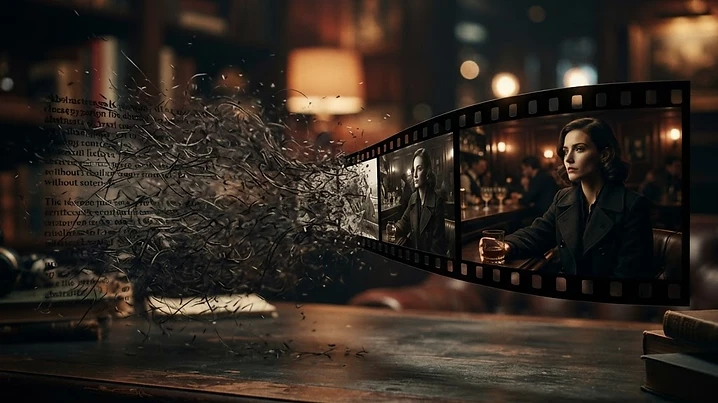
Stop recording, start shipping.
You are ten minutes away from your first professional AI narration.
Watch the 4-minute demoHow to evaluate a narration tool that actually works
The only way to evaluate a narration tool is to check if it treats individual sentences as independent, editable units. You need a system that allows you to change a single adjective in a paragraph without forcing the AI to re-render the entire video or audio file.
When testing options, ignore the marketing claims about total voice count and look at the control you have over pace and tone. A tool that gives you three hundred voices but no ability to adjust the timing of a pause is less useful than a tool with fifty voices that actually sound like they are talking to a human being. The goal is not variety; the goal is reliability.
Finally, look for a platform that treats the visual component as a first-class citizen alongside the audio. You want a tool that can take your narration and suggest visuals or allow for easy image swaps as you go. If you are still jumping between three different apps to get a video out the door, you have not actually solved the problem; you have just moved the friction to a different stage of the process.
What the fix looks like in your real daily workflow
The transition to a professional narration workflow means you stop being a producer and start being an editor. You paste your script into Fliki, select a voice that matches your brand persona, and hit generate to hear the initial draft immediately.
Once the audio is generated, you do not record anything. You simply read along, and if you hear a phrase that needs more emphasis or a slight change in wording, you edit that specific sentence and regenerate only that segment. This changes the act of creation from a physical performance into a precise, visual editing task that you can perform during a lunch break or between meetings.
This is what consistency looks like in practice. You take that same script and generate variants for different platforms, perhaps a shorter version for social media and a more detailed one for your website, all within the same interface. You no longer fear the idea of updating a product guide because you can simply swap out the text for the specific changed feature, rather than re-recording the entire narration from scratch.
Ship more, edit less
Stop letting your best ideas sit in your drafts folder because you do not have the time to sit in a recording booth. With the right tools, you can turn your writing into finished media instantly.
- Create weekly content in minutes
- Maintain your brand voice across every video
- Stop paying the cost of manual production
What you actually get, feature by feature
Natural AI Voice Generation
Produces lifelike speech that maintains proper rhythm and human-like emotional inflection.
Isolated Sentence Editing
Update specific lines without forcing you to re-render the entire video project.
Multilingual Support
Allows you to reach global audiences by translating your script into 80+ languages.
Integrated Visual Editor
Pairs your audio with relevant stock media automatically to save you manual editing.
Smart Timing Controls
Gives you precision over pauses and pacing so your narration sounds deliberate.
Cloud-Based Project Storage
Keeps all your narration assets in one place so you never lose a draft.
Life after you drop the microphone
Your Tuesday afternoon changes the moment you stop treating every video as a full-scale film production. Instead of spending three hours on a single slide deck narration, you now spend fifteen minutes tweaking the inflections of a high-quality AI voice to match your script. You move from the frustration of fifty retakes to a system where you simply correct a word and regenerate the specific sentence that missed the mark. Your output jumps from one video per month to three per week, and your audience finally sees the consistency they have been waiting for. This is not about cutting corners; it is about reclaiming the hours you lose to technical bloat. By the time you reach Friday, you have a library of content ready to ship, and your voice—clear, professional, and consistent—is the one they actually hear. You are no longer held back by the fear of how your own voice sounds on a recording, because you have replaced self-consciousness with a reliable, professional-grade narration tool. You stop waiting for the perfect day to record, because you realize that with the right tool, every day is a productive one.
Why you are actually hesitating
You are likely worried about three things: the subscription price, the quality of the AI, and the learning curve of yet another software. You look at the cost and wonder if it is better to just keep recording yourself for free, but you are forgetting that your time has a dollar value, and currently, you are losing money every time you spend two hours fighting with a microphone. The quality concern is valid if you are thinking about the robotic, monotone synthesizers of five years ago, but these modern voices handle nuance, pauses, and emphasis in ways that bypass the uncanny valley entirely. Regarding the learning curve, you are not signing up for a complex video editor that requires a degree to operate; you are signing up for a text-input system that creates assets from the scripts you have already written. If you can copy and paste text into an email, you can operate this tool. The risk is not in trying it; the risk is in ignoring the fact that your current process is not sustainable for long-term growth. When you look at the cost of one missed client conversion because your content library is empty, the monthly subscription pays for itself within the first week of use.

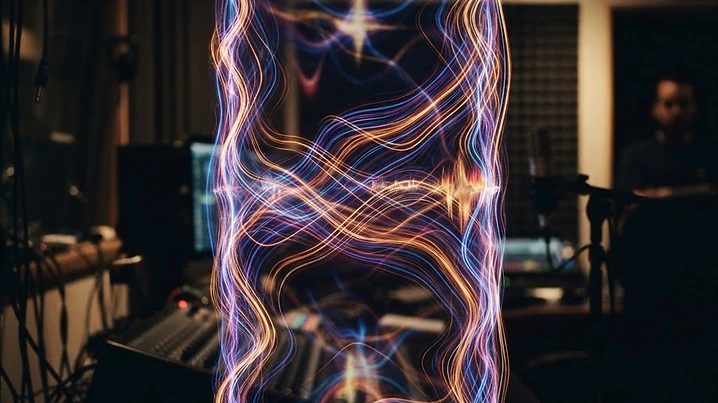
Stop recording, start shipping.
You are ten minutes away from your first professional AI narration.
Create your first videoThe price of the status quo
Staying exactly where you are today for another six months will cost you more than just the money you think you are saving by avoiding software. If you continue to let your best ideas stay in text format because the recording process is too daunting, you are effectively leaving your competitors to capture the market share that should be yours. Calculate your hourly rate and multiply it by the twelve hours you lose every month to audio editing and retakes; that is a direct financial loss you are writing off every single month. By December, you will be looking at hundreds of hours of lost potential and a content archive that has barely grown. This stagnation is a choice, but it is one you do not have to make. Every week you wait, your competition is shipping, iterating, and finding the audience you are currently ignoring. You are not just missing out on views; you are missing out on the compounding effect of an active, visible presence that builds trust over time. Stop paying the hidden tax of manual recording and start investing in a system that turns your writing into your biggest asset.
Making the choice to ship
Deciding to use this tool is the moment you stop being a perfectionist about audio and start being a professional about output. You do not need the perfect room, the perfect microphone, or the perfect energy level to create something that your audience finds valuable. You only need the script, and this tool takes the heavy lifting off your shoulders so you can focus on the ideas that actually drive your work. When you start, do not try to convert your entire back catalog at once; pick one project you have been putting off for months and finish it this afternoon. Watch how your mindset shifts when you realize that shipping a video is no longer a major event that requires a clean shirt and a quiet house. You are deciding that your content is more important than your ego regarding how it is made. Once you see the finished file, you will understand that the barrier to entry was never your skill, but your reliance on an outdated, manual recording process. You are now in the driver's seat, and the road to consistent, high-quality content is finally clear.
What this actually looks like
Straight talk: the pros and the cons
What you get
- Generates realistic, human-sounding narration instantly
- Supports over 80 languages and hundreds of voices
- Edit individual lines without regenerating the whole file
- Pairs narration with relevant visuals automatically
- Eliminates the need for microphones and soundproofing
Worth knowing
- Requires manual check of pronunciation for obscure brand names
- Limited control over complex multi-track audio layering
- Premium voices require a higher tier subscription

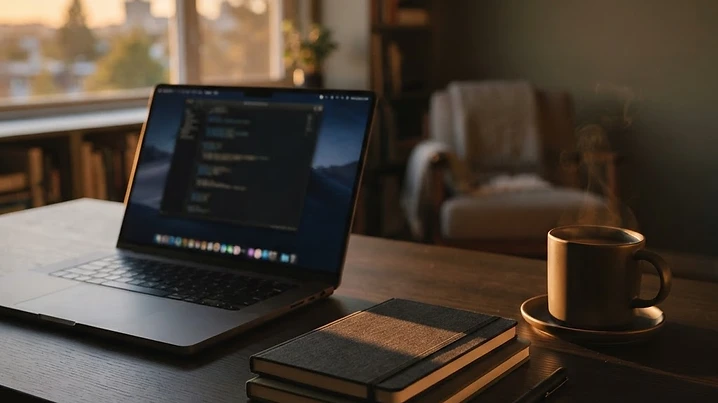
Professional audio without the studio
The days of worrying about your voice, your room acoustics, or your microphone quality are over. Get professional, inflected narration that keeps your audience listening.
- Choose from hundreds of lifelike voices
- Edit specific lines without full re-records
- Support for over 80 languages
How it works, step by step
- 1
Step 1
Paste your script
Copy your existing text or draft directly into the Fliki editor.
- 2
Step 2
Select your brand voice
Choose from hundreds of human-sounding voices tailored to your style.
- 3
Step 3
Refine the pacing
Adjust individual lines to get the perfect timing for your message.
- 4
Step 4
Sync your visuals
Add or swap images and clips that align with your narration.
- 5
Step 5
Publish your final file
Export your high-quality video file ready for any platform.
Your roadmap: what the first 30 days look like
- 1
Day 1
Set up and first test
Create your account and convert your first existing text document into a narrated file in under ten minutes.
- 2
Week 1
Build your workflow
Establish a consistent habit of using the tool for your daily or weekly content updates.
- 3
Week 2
Refine your voice
Experiment with different voice profiles to perfectly match the tone of your professional brand.
- 4
Month 1
Clear the backlog
Convert your months-old drafts into a steady stream of polished videos, finally clearing your content debt.
- 5
Month 3
Scale your output
Enjoy the results of a high-volume content strategy that requires a fraction of the time you used to spend.
Your first ten minutes
Here is what happens when you commit to fixing your narration process today. You create your account, paste a snippet of a script you have already written, and watch it turn into a narrated video in less time than it takes to make a cup of coffee. You will spend five minutes testing different voices to find the tone that matches your brand, and another five minutes letting the tool handle the visuals. That is it. You have finished a project that used to hang over your head for weeks. Do not let another month pass where you convince yourself that the recording booth is just around the corner. The barrier is gone, the tool is ready, and your audience is waiting for the content that has been trapped in your head as a draft. Click the button, import your text, and produce your first piece of professional-grade content today. You will look back at this moment as the day you stopped stalling and started scaling your voice. The only thing standing between you and a full content calendar is the decision to stop recording the hard way.
Stop recording, start shipping.
You are ten minutes away from your first professional AI narration.
Get Fliki AI nowAffiliate disclosure: the links on this page are affiliate links. If you buy through them we may earn a commission at no extra cost to you. It never changes what we recommend.