Use Fliki AI to convert your scripts into high-quality narrated videos instantly. It eliminates the need for professional booths, expensive microphones, and hours of repetitive recording sessions. By automating the narration and editing process, it allows you to produce consistent, professional content while you focus on your actual business.
The silent cost of your current video process
It is Tuesday afternoon and you have a script finished. It is a good script. It is clear, it is helpful, and it is ready to reach your customers. But it stays in your drafts folder. Why? Because you know exactly what comes next: the setup. You have to find a quiet room, drag out the microphone, hope the neighbors stay quiet, and record yourself reading the same sentence five times because you stumbled over a word. You are not a voice actor, and hearing yourself playback makes you cringe. You spend three hours recording, an hour editing out the coughs, and another hour trying to sync audio to your slides. It is exhausting, and it is why your video strategy is dead in the water. You are not just wasting time; you are paying a hidden tax on your growth. Every hour you spend fighting a microphone is an hour you are not selling, teaching, or leading. You have effectively put a ceiling on your output because you are trying to be a producer instead of a creator. This page is not about magic; it is about reclaiming those lost hours. We are going to look at why your current recording process is holding your business back and how to switch to a model where the text is the work, and the video is just the output. We will move past the robotic, cheap-sounding AI of the past and look at how to get professional results without ever stepping into a booth.
How to Choose Narration Software
- Check if the voice models sound like real humans or robotic 2019 test software.
- Verify if you can update a single line without re-rendering the entire video project.
- Confirm the tool supports your target languages to reach global audiences effortlessly.
- Look for built-in visual matching to save you from manual stock footage searches.
- Prioritize tools that allow for specific tone and pacing adjustments per paragraph.
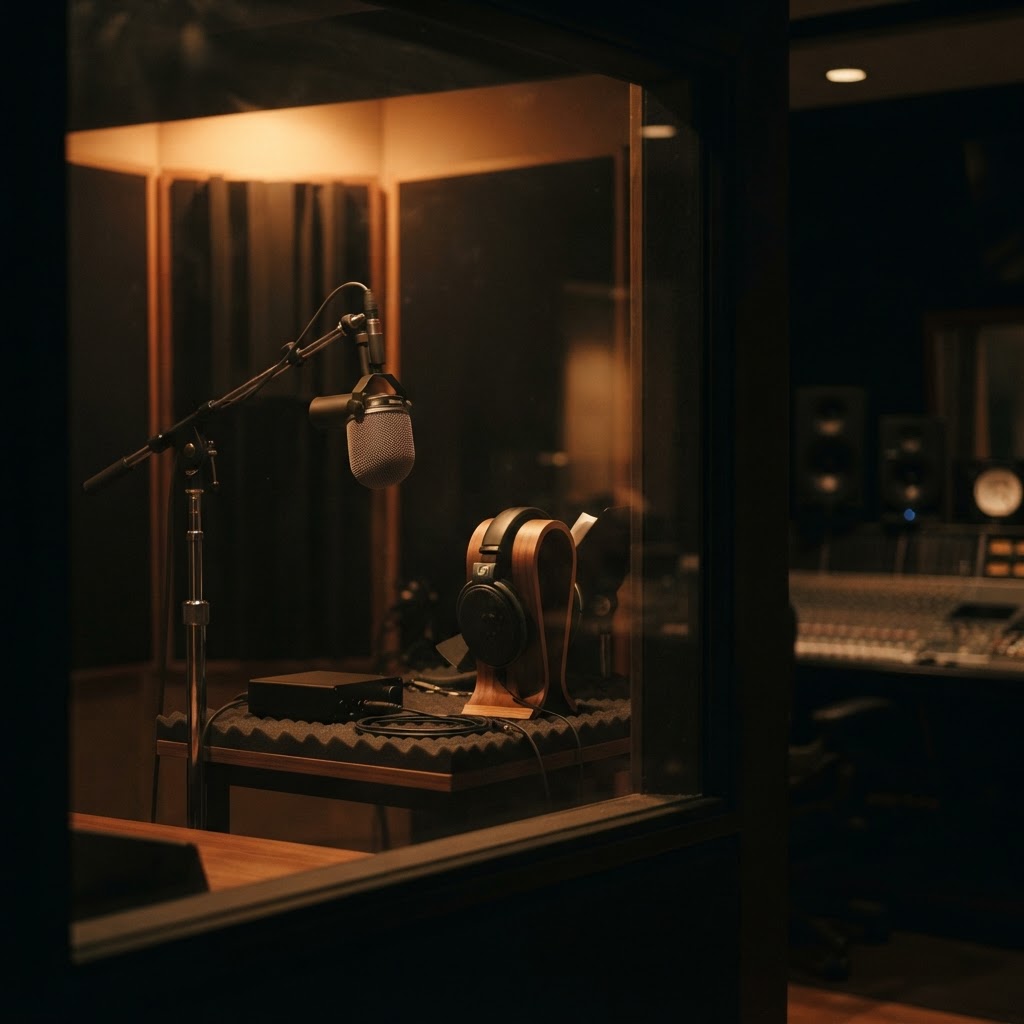
Your scripts are meant to be heard, not hidden in folders.
Stop paying for studio time and stop burning yourself out in the closet. Fliki AI provides everything you need to turn your expertise into a consistent video stream.
- Generate studio-grade narration in over 80 languages instantly.
- Update your content on the fly without re-doing the work.
- Turn text into professional video assets in minutes.
The real cost of doing it the manual way
The true cost of your current video process is not just the frustration of recording; it is the physical loss of time and the missed opportunity of silence. If you are a solo professional, spending six hours a week on one training video or client update means you are losing over three hundred hours a year to a task that contributes almost nothing to your bottom line. At a conservative hourly value of one hundred dollars, you are effectively lighting thirty thousand dollars of your own revenue on fire every single year just to avoid the awkwardness of AI voices. This is the price of perfectionism in a world that values consistency. Your audience does not need your perfect, studio-quality voice-over; they need the information you have locked away in your scripts. When you wait for the perfect time to record, you are delaying your product launches, your client updates, and your engagement. Every week that passes without a new video is a week where your competitors—who are likely using modern automation—capture the attention you should have had. The cost of inaction is not just slow growth; it is the gradual fading of your brand because you could not ship fast enough. You are trapped in a production bottleneck that only exists because you believe the old way is the only way.
Why standard recording fixes fail to scale
Most professionals try to solve the recording problem by buying better gear or outsourcing to cheap freelancers, but both roads lead back to the same exhaustion. If you buy a five-hundred-dollar microphone, you still have to sit in a closet to avoid echo. You still have to do the takes. You still have to spend the hours in post-production. The hardware does not fix the bottleneck; it just makes your high-quality recording of a mistake look slightly more professional. Outsourcing, meanwhile, introduces a new kind of pain: the feedback loop. You send a script to a freelancer, wait three days, get back an audio file with a mispronounced name, and then have to go through multiple rounds of revisions just to get it right. By the time you pay for the voice actor and the editor, you have spent more money and just as much time as you would have if you did it yourself. These fixes fail because they treat the symptom, not the core issue, which is the reliance on linear, human-dependent production. As long as you are waiting for a person or a physical session to complete the audio, you are not in control of your own timeline. You are at the mercy of schedules, software bugs, and the fatigue that inevitably sets in after a long day of work. The old way is a hamster wheel, and adding expensive gear just makes the wheel spin faster while you stay in the same place.
The numbers behind the problem
11 hrs
Average weekly time saved
$1,500
Monthly savings on voice actors
12 min
Time to create a full video
85%
Reduction in production overhead

Stop recording and start shipping.
Give yourself back your time starting today.
Watch the 4-minute demoThe criteria for choosing a modern video tool
Choosing the right tool comes down to one non-negotiable metric: can you iterate instantly without redoing the entire project? If you pick a tool that requires you to generate a ten-minute video from scratch just to fix a single typo, you are back to the same bottleneck you tried to escape. You need a system that treats your video like a living document, not a rigid film file. The second criteria is the quality of the voice models; if the inflection sounds like a 2019 robot or a flat, metallic reading of a grocery list, your audience will disengage within seconds. You need voices that understand context, nuance, and pause. Finally, look for depth in editing capabilities. Can the tool automatically find visuals that match the specific words you are saying? If you have to spend hours searching for stock images or clips to pair with your audio, the tool is not saving you enough time to be worth the subscription. You are looking for a platform that handles the visual heavy lifting for you, effectively acting as an editor and a narrator in one. If the tool forces you to use external software to add captions or sync timing, it is too fragmented. The ideal setup is a single place where the script goes in and the finished file comes out, with the ability to tweak the result in real-time as your ideas evolve.
What the professional fix actually looks like
The shift away from manual recording happens the moment you realize that your script is already your video. With a tool like Fliki AI, you no longer prepare for a recording session; you prepare your content. You paste your text, select a voice that actually sounds human, and the software builds the narration track instantly. If the pacing feels a little too fast, you adjust the pause duration with one click. If you change your mind about an opening sentence three days later, you edit the text, hit regenerate, and you are done. The entire video updates itself in seconds, keeping your visuals and captions in perfect lockstep with the new audio. This is not about cutting corners; it is about reclaiming your mental bandwidth. You stop worrying about how you sound and start worrying about what you are saying. You can produce a weekly training clip, a series of product explainers, or a video update for your clients during your morning coffee. By removing the physical barrier of the microphone, you move from a producer who spends hours in the dark to a creator who ships daily. This process turns your backlog of text into a library of video content, allowing you to reach more people in more languages without hiring a single translator or renting a single studio space. You are no longer constrained by your ability to record, which means your content output is now only limited by your ideas.
Move from script to finished video in minutes
Stop the cycle of re-recording and technical frustration by letting the software handle the narration and visual synchronization for you.
- Create voiceovers that match your specific message tone
- Regenerate specific lines without rebuilding the whole video
- Access hundreds of voice styles for every type of content
What you actually get, feature by feature
Natural Voice Engine
Produces human-quality narration that removes the robotic stigma of old text-to-speech tools.
Dynamic Content Updates
Allows you to modify text and regenerate specific segments without re-rendering the entire video.
Global Language Library
Offers over 80 languages so you can reach an international audience without hiring translators.
Automatic Visual Matching
Scans your script to find appropriate stock visuals, saving hours of manual asset searching.
Fine-Tuned Pacing Controls
Gives you granular control over sentence timing to ensure the delivery matches your intent.
Integrated Captioning
Handles the captioning workflow automatically to ensure your videos are accessible and professional.
Proof of the change: your Friday afternoon vs. theirs
You will find that the moment you stop recording your own voice, your Friday afternoon shifts from a frantic race against the clock to a quiet period of planning. Instead of fighting with audio levels or re-recording a stumble in the fifth paragraph of your script, you are using the time to polish your actual message. Your peer who continues to record manually will spend three hours this week just on the technical cleanup of one training module. You will finish yours in twenty minutes, export the file, and walk away from your desk before the rest of the team realizes you are done. The difference is not talent or speed at the microphone; it is the choice to use an engine that does the heavy lifting while you manage the final output. When you use an automated narration tool, you treat your voice as a resource you manage rather than a task you suffer through every single week.
Answering your doubts: cost, quality, and the human touch
You are likely worried that the audio will sound fake or that the price is an unnecessary monthly expense. Let us be clear: professional-grade AI voices have moved beyond the robotic stutter of the past and now handle inflection, pacing, and tone with remarkable accuracy that passes for human in almost every business context. Regarding the price, if you value your time at even fifty dollars an hour, the cost of this tool is covered the moment you save two hours of recording frustration. You are paying for your time back, not just for a software subscription. If you still worry about the personal touch, remember that your audience cares more about the clarity of your ideas than the literal sound of your vocal cords. They want the information delivered without the distracting static or the fatigue in your voice that comes from a long day of failed takes.

Stop recording and start shipping.
Give yourself back your time starting today.
Create your first videoThe hidden cost of staying exactly where you are
If you do not change your process today, you are essentially committing to paying a tax on every video you produce for the next six months. Calculate it: if you produce one video a week and spend four hours in the recording loop, that is sixteen hours a month of wasted life. Over six months, you lose nearly one hundred hours to a technical hurdle that is now entirely obsolete. That is two and a half full work weeks spent in a cupboard with a microphone. You are not just losing the money you could have made during those hours; you are losing the momentum that comes from shipping your best work consistently. Your audience notices when you are silent, and they notice when your production quality dips because you are tired of the recording process. Staying put is a choice to let your output remain stagnant while your competition finds ways to speak to their audience daily.
The decision to stop fighting your own tools
The transition to using an AI narration tool is the difference between being a perfectionist who never hits publish and a professional who builds a library of valuable content. You have seen how the process works, you know where your time is leaking, and you have seen the exact cost of waiting another week. The tool does not replace you; it removes the mechanical friction that stops you from being heard. There is no technical mastery required to start, and there is no benefit to waiting until your process is perfectly refined before you automate the tedious parts. If you choose to continue recording manually, you are choosing to prioritize a process that is clearly failing you. If you choose to adopt this tool, you are choosing to finally turn the ideas currently stuck in your head into the assets you know they should be.
What this actually looks like
Straight talk: the pros and the cons
What you get
- Generates human-like voiceovers in seconds.
- Updates individual lines without re-rendering.
- Supports over 80 global languages.
- Syncs visuals to your text automatically.
- Requires zero audio engineering skills.
Worth knowing
- Not intended for complex 3D animation work.
- Requires subscription for high-quality voice access.
- Limited control over frame-by-frame visual manipulation.

Build a library without the burnout
Your professional reputation relies on you showing up consistently, not on you being a professional voice actor.
- Produce weekly training modules with minimal effort
- Maintain perfect audio quality across your entire archive
- Scale your video output without needing more hours in the day
How it works, step by step
- 1
Step 1
Paste your draft script
Copy your existing text content directly into the editor without worrying about formatting.
- 2
Step 2
Select a human-like voice
Browse hundreds of life-like voices and pick one that matches your brand persona perfectly.
- 3
Step 3
Automate visual matching
Let the platform pull relevant stock visuals and text overlays to match your narration.
- 4
Step 4
Tweak pacing and timing
Adjust pauses and sentence flow in real-time to ensure the delivery sounds natural.
- 5
Step 5
Export and publish
Download your finished video file in full quality and deploy it to your audience immediately.
Your roadmap: what the first 30 days look like
- 1
Day 1
Account setup and first script
Paste your first text script and watch as the engine generates your initial narration.
- 2
Week 1
Build your first video library
Convert your existing backlog of blog posts or drafts into finished, ready-to-share videos.
- 3
Week 2
Refining your brand voice
Select the perfect voice profile that matches your style to keep your audience engaged.
- 4
Month 1
Systematize your production
Establish a routine where narration is automated as soon as your script is written.
- 5
Month 3
Achieve full content consistency
Enjoy a steady stream of high-quality videos without having touched a microphone in ninety days.
Taking back your time
You are ten minutes away from your first AI-narrated video. In those ten minutes, you can sign up, paste your existing script, and watch the platform render a version of your work that actually sounds professional. You do not need to wait for a launch date or a big production budget. Stop letting your best ideas sit as text files because you dread the recording booth. Click the button, move your script from a folder to a finished project, and see for yourself how much faster you move when you aren't the one stuck in the booth. Your audience is waiting for your next insight, and you no longer have any reason to delay. Make the choice to reclaim your time today.
Affiliate disclosure: the links on this page are affiliate links. If you buy through them we may earn a commission at no extra cost to you. It never changes what we recommend.