How Does AI Turn Real-Time Information Into Instant Images?
Understanding the bridge between live search data and visual generation.
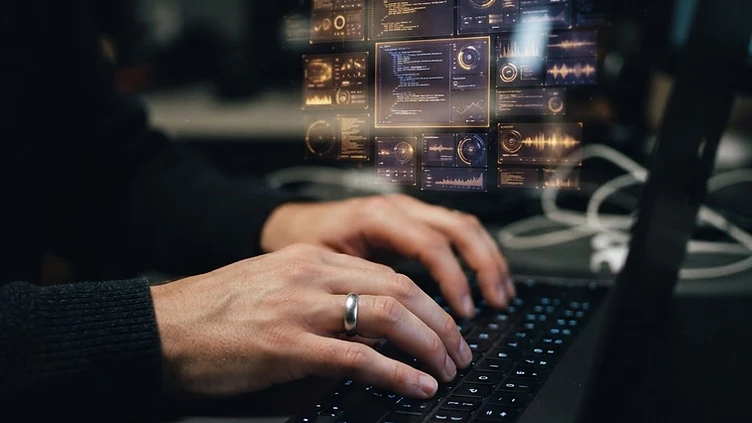
AI turns real-time information into images by integrating live web search data with latent diffusion models. These models convert text descriptions—enriched with current news or trends—into pixel representations. By processing real-time context alongside static training weights, the system creates visually accurate, up-to-the-minute images that reflect the state of the world today.

Grok
xAI's conversational AI with real-time knowledge and a built-in image generator
If this trivia made you curious about Grok, it is in the Nexus AI Catalog.
Get GrokFrom Web Search to Visual Prompt
AI transforms real-time search queries into visual prompts by grounding language models in live internet data. When you ask for an image of a current event, the system first fetches live headlines and data points before feeding them into a high-fidelity image generator. This ensures that the generated content reflects the very latest developments, bypassing the limitations of static training datasets that would otherwise be unaware of today's news.
This retrieval-augmented generation process is what makes modern tools feel current rather than historical. By dynamically adjusting the latent space, the AI prioritizes fresh information to ensure that elements like weather, current fashion trends, or specific event details appear accurately in the final render. It is a seamless handshake between the information engine and the creative engine.
How Diffusion Models Interpret Reality
Diffusion models create images by iteratively removing random noise from a field of pixels until the output matches your description. These models learn the mathematical relationship between text descriptions and visual patterns, allowing them to reconstruct complex concepts like 'sunny weather in a modern city' with incredible nuance and high resolution.
This process is essentially a deep learning interpretation of art. By training on billions of image-text pairs, the model recognizes that specific words correspond to specific arrangements of light, color, and texture. When paired with real-time data, the AI can apply this understanding to scenarios that did not exist when the model was first trained, effectively 'seeing' the present through its learned lens of the past.

The Speed of Synthesis
Modern image synthesis happens at high speeds because of highly optimized GPU hardware and lightweight model architectures. Systems are now capable of moving from a text input to a high-definition image in a matter of seconds, allowing for a creative workflow that feels as fast as a conversation.
This speed is crucial because it enables real-time iteration. You can refine your request, add more detail, or shift the focus of the image based on the results, and the AI will adjust accordingly. By minimizing the time between the request and the visual payoff, the barrier to entry for professional-quality image creation has essentially collapsed, empowering everyone to manifest their visual ideas instantly.

Real-Time Knowledge and Creative AI
Systems like Grok represent the next step by combining real-time search, conversational reasoning, and image generation in one unified experience. Because these tools have direct access to live data streams, they can generate images that are not just imaginative but also factually grounded in current trends or breaking news.
This integration removes the need to toggle between a search engine and an art tool. By keeping the conversation and the generation in the same environment, the system maintains context, leading to fewer errors and a more coherent creative process. It turns the AI from a simple tool into a true partner in visual storytelling, capable of updating its creative output whenever the underlying data changes.

Quick-fire facts
- Diffusion models start with pure noise and gradually refine it into clear imagery.
- Real-time integration allows AI to visualize events occurring only minutes ago.
- Latent space is the mathematical 'map' where AI stores its knowledge of visual concepts.
- Modern GPU acceleration makes sub-five-second image generation possible for personal devices.
- Grounding AI in live data reduces the prevalence of common visual hallucinations.
- Text-to-image systems have processed trillions of images during their training phases.
2.0s
Average time for rapid image generation in 2026
1B+
Parameters in typical high-end diffusion models
2026
Year of widespread real-time search-to-image integration