How Do AI Agents Manage Complex Workflows Automatically?
Moving beyond simple chat to autonomous task execution.

AI agents act as autonomous software workers by utilizing a sequence of reasoning steps to complete complex, multi-stage business processes. Instead of just answering questions, these agents use planning tools and API integrations to execute specific actions across different digital environments, such as updating databases, triggering emails, or managing supply chain inventory.

Gemini Enterprise Agents
Create, deploy, and govern AI agents on one secure enterprise platform
If this trivia made you curious about Gemini Enterprise Agents, it is in the Nexus AI Catalog.
Get Gemini Enterprise AgentsThe Shift from Chat to Action
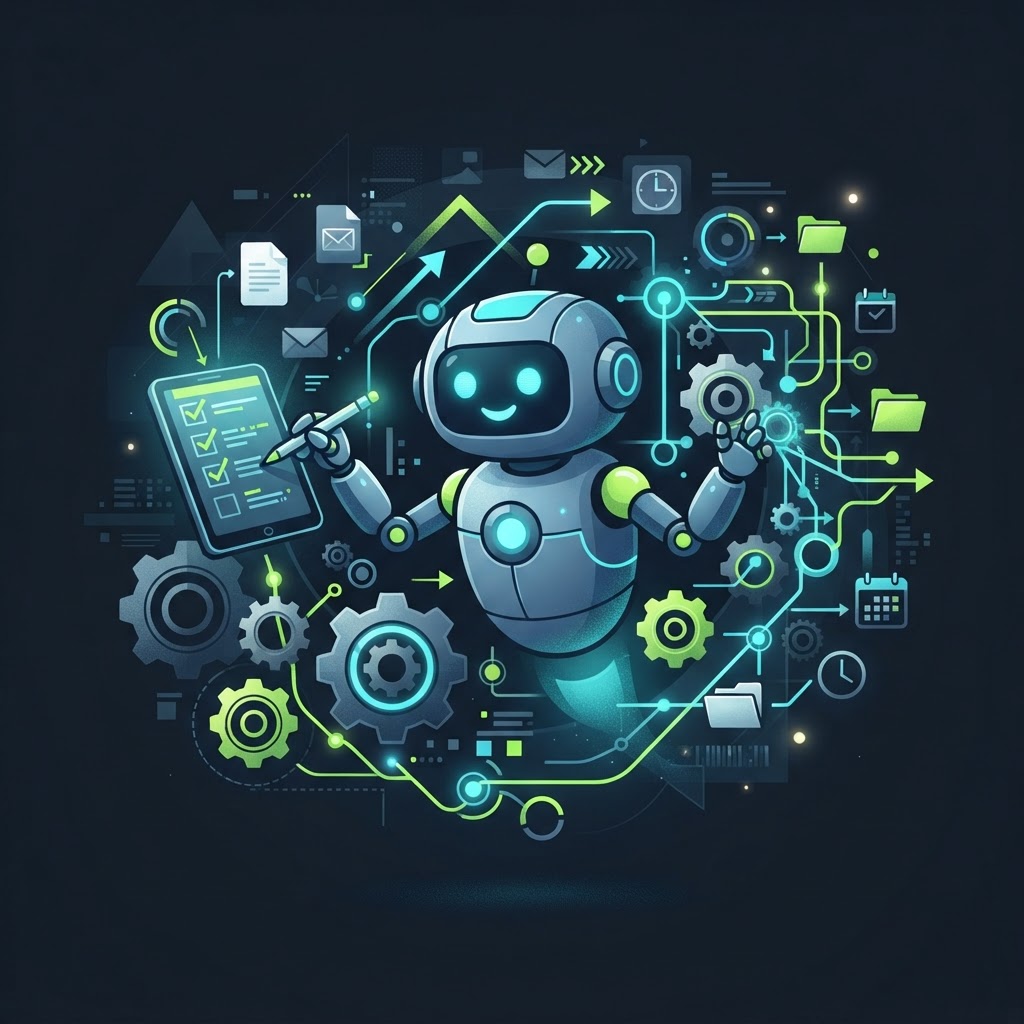
AI agents work by transforming a high-level goal into a structured plan of sequential actions that require no human intervention once triggered. While standard chatbots stop at generating text, an agent environment—like the Gemini Enterprise Agents framework—allows the model to navigate software interfaces and execute actual commands.
This shift represents a fundamental change in how software interacts with human intent. Instead of you spending hours clicking through menu-heavy business platforms, you define the desired outcome, and the agent orchestrates the necessary steps across your digital tools to get the job done.
How Agents Plan and Reason
Agents utilize a process known as chain-of-thought reasoning to break down complicated requests into small, manageable tasks before beginning any execution. By identifying the dependencies between tasks, the agent determines the most logical order of operations to ensure data integrity and task accuracy.
This planning capability is what distinguishes a true agent from a basic automation script. If an agent encounters a missing piece of information during its execution, it does not simply fail; it re-evaluates the path, looks for the data in a secondary location, or flags the issue for human review.

Connecting Across Digital Ecosystems
The true power of an agent lies in its ability to interact with external systems through secure APIs and pre-defined enterprise integrations. An agent needs a 'handshake' with your CRM, your inventory database, and your email server to move information fluidly between them without human copying and pasting.
Because these agents operate within secure enterprise platforms, they maintain strict governance over sensitive data. They follow permission-based structures that ensure the AI can only access the files and tools strictly necessary to perform its specific assigned role, maintaining security throughout the workflow.

Ensuring Reliability and Governance
Professional agents incorporate guardrails and human-in-the-loop triggers to prevent errors and maintain consistent output in a business setting. By defining specific operational boundaries, organizations can trust agents to handle sensitive tasks like financial reporting or client communications without fear of unpredictable behavior.
In 2026, the rise of enterprise platforms is making it significantly easier to deploy these agents with built-in monitoring tools. Managers can view a 'thought trace' of what the agent did, why it chose a specific path, and exactly when each stage of the workflow was successfully completed, providing total transparency.
Quick-fire facts
- AI agents operate by breaking complex goals into atomic, actionable steps.
- The reasoning cycle of an agent is often invisible to the end user.
- Agents require secure API access to communicate between disconnected software applications.
- Guardrails ensure that agents stay within defined operational and ethical boundaries.
- Modern enterprise platforms allow for audit logs of every decision an agent makes.
- True agents can autonomously handle errors by re-planning their own workflows.
2026
The year enterprise agents became the standard for workflow automation.
4x
Typical increase in task completion speed compared to manual workflows.
100%
The percentage of agent actions logged for governance and auditing.
What is the primary difference between an AI chatbot and an AI agent?
Affiliate disclosure: the links on this page are affiliate links. If you buy through them we may earn a commission at no extra cost to you. It never changes what we recommend.